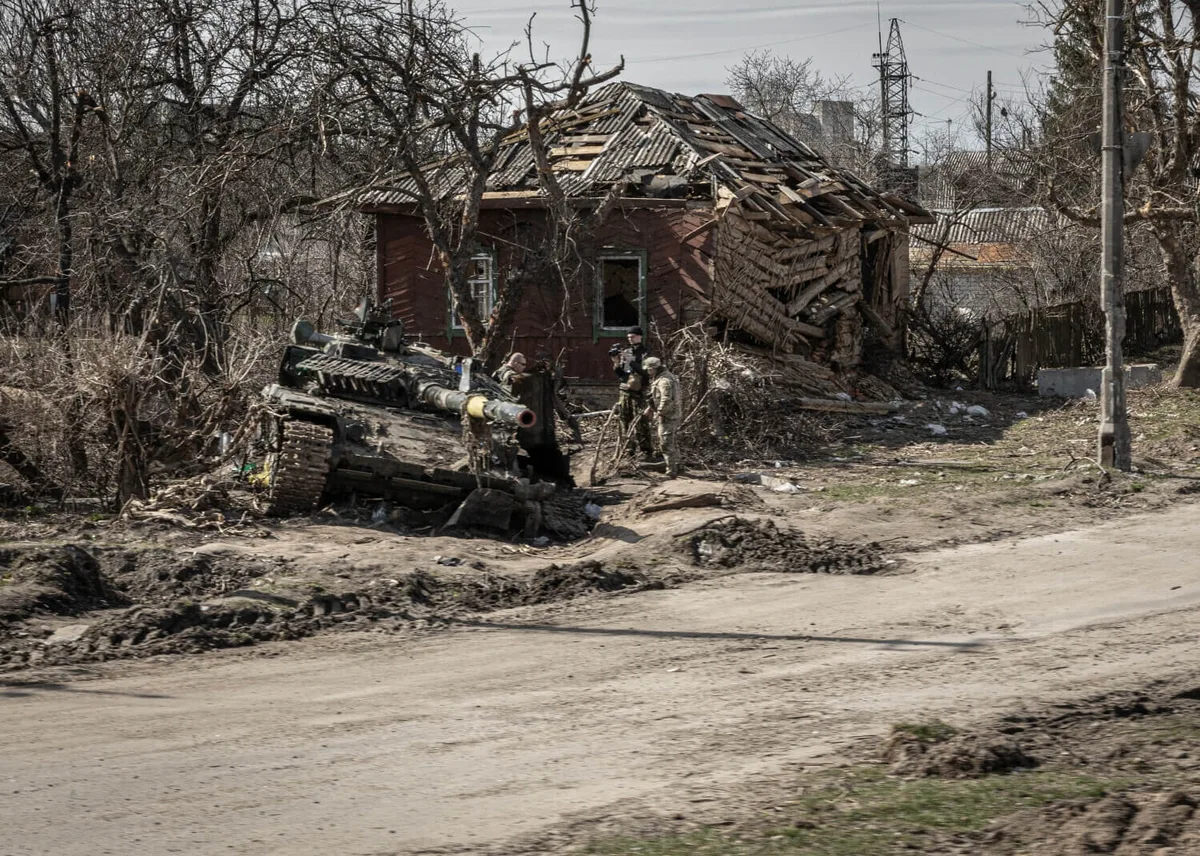
"They had me stand with my back to Mykyta. The soldier reloaded his rifle and said he was going to shoot him right then."
Source: Sestry
Author: Yevheniia Semenyuk
For a year and a half, no one has seen or heard anything about Mykyta Buzinov from the Chernihiv region. Sestry continues its series of stories about civilian prisoners of war—“The Path from Captivity.” Mykyta’s story is told by a close friend, Kateryna Ogievska
Mykita Buzinov is being held captive by the Russian Federation.
“Stay strong!” said the village head, patting the young man’s mother on the shoulder
. We were awakened by a call from his family. They reported that there were explosions around Chernihiv and that airfields were being bombed. We went to withdraw cash, filled up the car, and in the evening of February 24, set off for Mykhailo-Kotsyubynskyi, a village near Chernihiv. We thought we’d be safe there. And in the early days, we were.
Then convoys of enemy military vehicles passed by on the road. We saw over a hundred tanks and artillery pieces. At first, the Russian troops hardly ever stopped in the village and left the villagers alone. But later they began looting stores, and their air force bombed the local school.
On the night of March 3–4, our guys defeated a group of occupiers just outside the village. The Russian soldiers who survived returned to Kotsyubynske and spent the night at a veterinary clinic. The next day, they began terrorizing the Ukrainian population.
I agree to the use of my contact information to receive the newsletter. I understand that my personal data will be processed in accordance with the Privacy Policy and that I can unsubscribe at any time.
In the morning, the Russians were moving their equipment and making sure there were no locals on the road. They approached our yard, checked everyone’s documents and phones, and asked what we were doing there. We said we had come here to seek refuge.
The shelling began. We ran to take cover in the cellar. About five Russian soldiers followed us. Their commander collected our phones, checked them, and then ordered Mykyta, my mom, and my older brother to follow him to clarify some questions. I waited for them, but they didn’t come back. While I was waiting, I overheard the Russian soldiers talking about how it wasn’t as scary in Syria as it was here.
After a while, one of the soldiers came down, pointed at me, asked if I was Nikita’s girlfriend, and ordered me to go with him. He walked behind me with his rifle cocked. When he noticed that I was stepping around the broken glass on the floor, he threatened to shoot me if I didn’t walk in a straight line.
A minute later, I saw Mykyta, who was kneeling on the ground. They made me kneel next to him and began interrogating me. They said they’d read online that people were writing about them as rapists and murderers, and demanded that I say outright whether they were good people or not. I tried to avoid answering and said I didn’t know anything. Then they made me turn my back to Mykyta. The soldier reloaded his rifle and said he was going to shoot him right then. Then they took me further away so I wouldn’t get blood on me.
I asked later, “Why are they doing this?” “These are our disciplinary methods,” the soldier replied. Apparently, that’s exactly how Mykyta had told them everything. I don’t know what it was about.
Eventually, they let us all go—me, Mykyta’s mom, his older brother, and the uncle we were staying with at the time. But not Mykyta. We were told that he faced, at best, 15 years in prison, and that he would serve his sentence in Ukraine.
We heard that many locals were taken away, severely beaten, but eventually released. And we hoped that Mykyta would be released too. But he wasn’t brought back. A day later, Mykyta’s mom went to the officers to find out what had happened to her son.
She ran into the village head, who was on her way to a meeting with the occupiers, and promised to find out what had happened to Mykyta. A few hours later, they met again; the village head patted his mother on the shoulder, said, “Be strong,” and walked away. We didn’t understand what that meant. So we kept searching and asking around. My uncle worked on a farm in the village; the Russians often came by for water and milk. We learned from them that the unit that had taken Mykyta had left, and they had probably taken him with them. In which direction—we don’t know.
On March 19, when there were no Russian soldiers at the exit toward Slavutych, Nikita’s mom and I left the village.
Nothing is known about Nikita Buzinov’s whereabouts to this day.
We sent letters to all prisons and detention centers, and the system finally accepted
one of them After the de-occupation, a man’s body was found in the forest at one of the Russian soldiers’ positions. He had been detained along with Mykyta. He, too, was not released but was taken away somewhere. I learned the findings of the forensic medical examination from his wife, Natalia: he was killed by a gunshot to the head. All the fingers on his bound hands were broken. His hands were covered in calluses—most likely, he was forced to dig trenches.
We continued searching for Mykyta together with the security services and the Ukrainian military. But his body was not found, and we began to hope that he had been taken to Russian territory. But for a year and a half now—from then until today—no one has seen him or heard anything about him. Neither the Russian side nor the ICRC has said anything about Mykyta either.
We tried searching through Russian systems for sending letters to penal colonies. If the system allows a letter through, it’s highly likely that the person we’re looking for is in the prison or pretrial detention center that received the letter. We started sending letters everywhere, and one of them made it to Belgorod Pretrial Detention Center No. 3. We found a local lawyer and asked him to go there, but he wasn’t even allowed into the detention center.
When we realized we couldn’t find Mykyta on our own, we decided to form a civic organization together with other Ukrainians whose relatives had gone missing.
In the spring of 2022, everyone was searching for their loved ones through special Facebook groups and writing to the police, the SBU, and the Red Cross. That’s when I found Karina Dyachuk on Facebook, one of the founders of the civic organization “Civilians in Captivity.” At first, we simply communicated and shared information, and later we established a civic association and began communicating with the ombudsman and representatives of the Red Cross. The latter explained that when they visit prisons, the Russian side only allows them access to select colonies or cells. But if they see civilians in the cells alongside military personnel, they document it, record the details, and pass the information on to the families.
What will we do now? Mykyta’s parents donated blood samples; so far, no DNA match has been found. I know there have been cases where tortured bodies were returned from captivity. So, receiving official confirmation that your loved one is in Russian captivity is still no guarantee that the person will return home alive. People there are being destroyed not only physically but also mentally. For example, they stage fake exchanges—they bring people as if for an exchange, and then say, “They’ve rejected you,” and this kind of mockery is terribly demoralizing.
We haven’t had any information about him for a year and a half. I want to believe for the best, but I understand that I have to be prepared for anything. I understand that even if he returns, he’ll be a different person after what he’s been through. But my only wish is for him to come back alive. And that’s all I pray to God for.
There is no single agency in Ukraine dedicated to searching for civilian captives held by the Kremlin
— The abduction of Ukrainian civilians in the occupied territories and their deportation to unknown destinations is a very serious problem for Ukraine, — comments Tetiana Katrychenko, coordinator of the Media Initiative for Human Rights. — In other armed conflicts around the world, there haven’t been this many detained civilians, which is why this information must be communicated as loudly as possible to Europeans and Americans. After all, when a problem isn’t brought to light, it’s easier to ignore.
In fact, Ukraine has no single responsible authority or representative who could handle the accounting, search, and negotiations for the release of civilian hostages. Therefore, each existing agency does not conduct investigations but simply collects reports from citizens regarding missing persons. There is no single database of these people. Consequently, it is impossible to provide exact figures.
The Coordination Headquarters under the Main Intelligence Directorate (GUR) handles captured military personnel; they gather information and conduct negotiations on exchanges. We have a National Information Bureau that functions as a database; it collects information on both military personnel and civilians detained in connection with the conflict. We also have a Human Rights Commissioner who addresses civilian issues but lacks the mandate to negotiate on this matter.
We have launched an initiative: on our page, we have posted a call to release civilian hostages in seven languages. The idea is for people in different countries to be able to read short stories about civilian captives. An artist is painting portraits of these hostages so that people can write letters to local Russian embassies demanding the release of these individuals.
Author: Yevheniia Semenyuk
For a year and a half, no one has seen or heard anything about Mykyta Buzinov from the Chernihiv region. Sestry continues its series of stories about civilian prisoners of war—“The Path from Captivity.” Mykyta’s story is told by a close friend, Kateryna Ogievska
Mykita Buzinov is being held captive by the Russian Federation.
“Stay strong!” said the village head, patting the young man’s mother on the shoulder
. We were awakened by a call from his family. They reported that there were explosions around Chernihiv and that airfields were being bombed. We went to withdraw cash, filled up the car, and in the evening of February 24, set off for Mykhailo-Kotsyubynskyi, a village near Chernihiv. We thought we’d be safe there. And in the early days, we were.
Then convoys of enemy military vehicles passed by on the road. We saw over a hundred tanks and artillery pieces. At first, the Russian troops hardly ever stopped in the village and left the villagers alone. But later they began looting stores, and their air force bombed the local school.
On the night of March 3–4, our guys defeated a group of occupiers just outside the village. The Russian soldiers who survived returned to Kotsyubynske and spent the night at a veterinary clinic. The next day, they began terrorizing the Ukrainian population.
I agree to the use of my contact information to receive the newsletter. I understand that my personal data will be processed in accordance with the Privacy Policy and that I can unsubscribe at any time.
In the morning, the Russians were moving their equipment and making sure there were no locals on the road. They approached our yard, checked everyone’s documents and phones, and asked what we were doing there. We said we had come here to seek refuge.
The shelling began. We ran to take cover in the cellar. About five Russian soldiers followed us. Their commander collected our phones, checked them, and then ordered Mykyta, my mom, and my older brother to follow him to clarify some questions. I waited for them, but they didn’t come back. While I was waiting, I overheard the Russian soldiers talking about how it wasn’t as scary in Syria as it was here.
After a while, one of the soldiers came down, pointed at me, asked if I was Nikita’s girlfriend, and ordered me to go with him. He walked behind me with his rifle cocked. When he noticed that I was stepping around the broken glass on the floor, he threatened to shoot me if I didn’t walk in a straight line.
A minute later, I saw Mykyta, who was kneeling on the ground. They made me kneel next to him and began interrogating me. They said they’d read online that people were writing about them as rapists and murderers, and demanded that I say outright whether they were good people or not. I tried to avoid answering and said I didn’t know anything. Then they made me turn my back to Mykyta. The soldier reloaded his rifle and said he was going to shoot him right then. Then they took me further away so I wouldn’t get blood on me.
I asked later, “Why are they doing this?” “These are our disciplinary methods,” the soldier replied. Apparently, that’s exactly how Mykyta had told them everything. I don’t know what it was about.
Eventually, they let us all go—me, Mykyta’s mom, his older brother, and the uncle we were staying with at the time. But not Mykyta. We were told that he faced, at best, 15 years in prison, and that he would serve his sentence in Ukraine.
We heard that many locals were taken away, severely beaten, but eventually released. And we hoped that Mykyta would be released too. But he wasn’t brought back. A day later, Mykyta’s mom went to the officers to find out what had happened to her son.
She ran into the village head, who was on her way to a meeting with the occupiers, and promised to find out what had happened to Mykyta. A few hours later, they met again; the village head patted his mother on the shoulder, said, “Be strong,” and walked away. We didn’t understand what that meant. So we kept searching and asking around. My uncle worked on a farm in the village; the Russians often came by for water and milk. We learned from them that the unit that had taken Mykyta had left, and they had probably taken him with them. In which direction—we don’t know.
On March 19, when there were no Russian soldiers at the exit toward Slavutych, Nikita’s mom and I left the village.
Nothing is known about Nikita Buzinov’s whereabouts to this day.
We sent letters to all prisons and detention centers, and the system finally accepted
one of them After the de-occupation, a man’s body was found in the forest at one of the Russian soldiers’ positions. He had been detained along with Mykyta. He, too, was not released but was taken away somewhere. I learned the findings of the forensic medical examination from his wife, Natalia: he was killed by a gunshot to the head. All the fingers on his bound hands were broken. His hands were covered in calluses—most likely, he was forced to dig trenches.
We continued searching for Mykyta together with the security services and the Ukrainian military. But his body was not found, and we began to hope that he had been taken to Russian territory. But for a year and a half now—from then until today—no one has seen him or heard anything about him. Neither the Russian side nor the ICRC has said anything about Mykyta either.
We tried searching through Russian systems for sending letters to penal colonies. If the system allows a letter through, it’s highly likely that the person we’re looking for is in the prison or pretrial detention center that received the letter. We started sending letters everywhere, and one of them made it to Belgorod Pretrial Detention Center No. 3. We found a local lawyer and asked him to go there, but he wasn’t even allowed into the detention center.
When we realized we couldn’t find Mykyta on our own, we decided to form a civic organization together with other Ukrainians whose relatives had gone missing.
In the spring of 2022, everyone was searching for their loved ones through special Facebook groups and writing to the police, the SBU, and the Red Cross. That’s when I found Karina Dyachuk on Facebook, one of the founders of the civic organization “Civilians in Captivity.” At first, we simply communicated and shared information, and later we established a civic association and began communicating with the ombudsman and representatives of the Red Cross. The latter explained that when they visit prisons, the Russian side only allows them access to select colonies or cells. But if they see civilians in the cells alongside military personnel, they document it, record the details, and pass the information on to the families.
What will we do now? Mykyta’s parents donated blood samples; so far, no DNA match has been found. I know there have been cases where tortured bodies were returned from captivity. So, receiving official confirmation that your loved one is in Russian captivity is still no guarantee that the person will return home alive. People there are being destroyed not only physically but also mentally. For example, they stage fake exchanges—they bring people as if for an exchange, and then say, “They’ve rejected you,” and this kind of mockery is terribly demoralizing.
We haven’t had any information about him for a year and a half. I want to believe for the best, but I understand that I have to be prepared for anything. I understand that even if he returns, he’ll be a different person after what he’s been through. But my only wish is for him to come back alive. And that’s all I pray to God for.
There is no single agency in Ukraine dedicated to searching for civilian captives held by the Kremlin
— The abduction of Ukrainian civilians in the occupied territories and their deportation to unknown destinations is a very serious problem for Ukraine, — comments Tetiana Katrychenko, coordinator of the Media Initiative for Human Rights. — In other armed conflicts around the world, there haven’t been this many detained civilians, which is why this information must be communicated as loudly as possible to Europeans and Americans. After all, when a problem isn’t brought to light, it’s easier to ignore.
In fact, Ukraine has no single responsible authority or representative who could handle the accounting, search, and negotiations for the release of civilian hostages. Therefore, each existing agency does not conduct investigations but simply collects reports from citizens regarding missing persons. There is no single database of these people. Consequently, it is impossible to provide exact figures.
The Coordination Headquarters under the Main Intelligence Directorate (GUR) handles captured military personnel; they gather information and conduct negotiations on exchanges. We have a National Information Bureau that functions as a database; it collects information on both military personnel and civilians detained in connection with the conflict. We also have a Human Rights Commissioner who addresses civilian issues but lacks the mandate to negotiate on this matter.
We have launched an initiative: on our page, we have posted a call to release civilian hostages in seven languages. The idea is for people in different countries to be able to read short stories about civilian captives. An artist is painting portraits of these hostages so that people can write letters to local Russian embassies demanding the release of these individuals.
This is an automatic translation generated by DeepL.