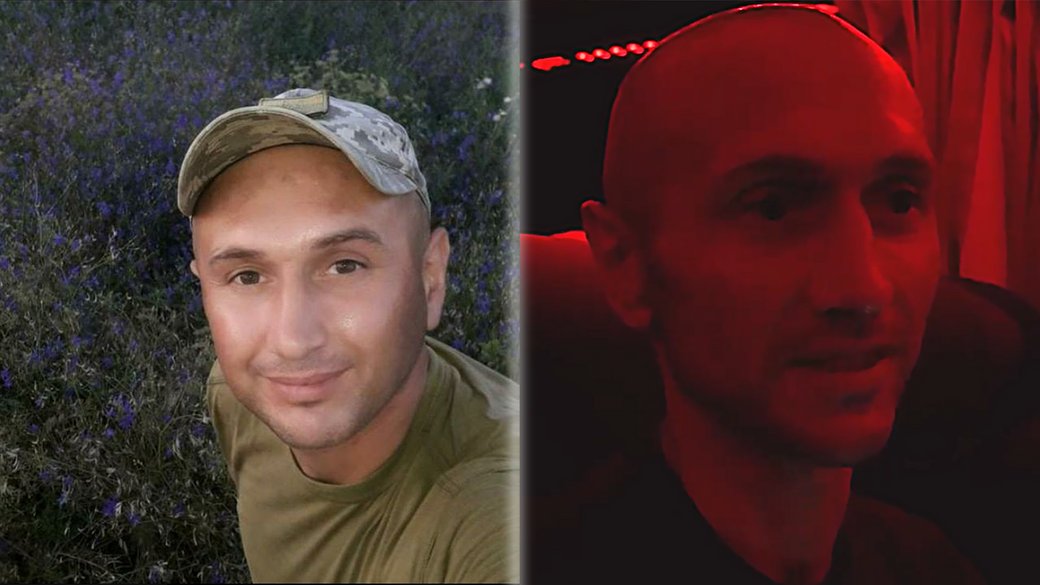
His father was sustained by the dream of seeing his son again: Border Guard Oleksiy Turbal from the Zhytomyr region was returned from Russian captivity
Source: Suspilne
Author: Olena Slobodeniuk
On June 25, during a prisoner exchange, another defender of Mariupol and Azovstal—border guard Oleksii Turbal from the Ovruch community—was returned to Ukraine. Oleksiy was taken prisoner by the Russians on May 18, 2022, after the troops received orders to withdraw from Azovstal. The Russians then sent the captured border guard to Olenivka and later to a penal colony in the city of Sverdlovsk.
Oleksiy’s sister, Olena Dovbnya, told this to reporters from Suspilne Zhytomyr. According to her, for over two years while Oleksiy was in captivity, the family never lost faith that they would definitely be able to reunite.
“Both Oleksiy’s wife, Tetiana, and I—all this time—we reached out to every possible organization, attended meetings at the Coordination Headquarters, and participated in rallies in support of our captives. We had practically no contact with our Leshka, but we never lost hope that we would definitely be able to see him again. There are three of us children; he is the youngest. Our mom died from a serious illness almost 10 years ago, and Dad was left on his own. These past two years of Oleksiy’s captivity have been a real ordeal for Dad. Every time, he would say to us and our middle brother—who, by the way, is also in the military—“We’ll wait for our Oleksiy, won’t we?” And we always replied with confidence that “yes, that’s exactly what will happen,” says Olena.
Oleksiy Turbal had been serving in the Mariupol Border Guard Detachment since 2014. On February 24, 2022, Olena managed to get through to her brother and learned that the situation there was already very dire.
“When Russia’s full-scale invasion of Ukraine began on February 24, Oleksiy was on the front lines in one of the sectors. When the explosions started here, I called him, and he said they were already being pounded by Grad rockets at that moment. We messaged each other periodically on Signal. I still can’t forget his words. You know, he said then: ‘I’m here right now, and my friends are lying next to me. They’re dead, but we can’t bury them because it’s freezing cold.’ Then those who survived were forced to retreat from their positions and move to Mariupol. Together with his comrades, Oleksiy made his way, hiding from house to house. “My brother wrote that there was no food or water—they drank water drained from the radiators, found a can of tomato sauce somewhere, and divided it among themselves, one teaspoon each,” says Oleksiy’s sister.
A Birthday
Gift On his 36th birthday, March 30, Oleksiy told his sister that he had received what he called a “royal gift”—a can of stewed meat. He added it to the communal pot—in one of the houses, he, his comrades, and local civilians cooked lunch together using whatever food everyone had left.
“Back then, we were still able to stay in touch with him somehow. Oleksiy said they had a car—its tires were punctured and the rims were flat, but they still had to get to Azovstal somehow. He said at the time that he didn’t know if they’d make it, because there was constant shelling. There were a lot of people in that car—I don’t know exactly how many, but a lot. And that was it. I lost contact with my brother then. I was left at home alone with my two children—my husband had been drafted, my older son is studying at a military academy, and I haven’t heard from Oleksiy. Oleksiy’s wife, Tetyana, took a month to make her way here to the Zhytomyr region. I was terribly worried, but a week later my brother got in touch and said they had finally made it to “Azovstal,” says Olena.
Leaving “Azovstal”
Oleksiy remained at “Azovstal” until the order to evacuate was given. The family learned from Red Cross representatives that he had been taken to Olenivka after the evacuation.
“And these were Red Cross representatives from Geneva. Then Lesha was able to call me from some number and confirmed that he was indeed in Olenivka. A week later, he called again and said everything was fine. There were no more calls. After confirming that my brother was a prisoner of war, we started going to and calling all the relevant authorities. When the Russians carried out a planned explosion in Olenivka in July, killing many “Azov” fighters, my brother was no longer there. He and some of the other prisoners had been sent to a penal colony in Sverdlovsk even before the explosion. We heard this information from other guys who had been returned from Russian captivity. We have these support groups—Oleksiy’s wife, Tetiana, joined all of them. That’s how we found out where Oleksiy was,” says Olena.
She says that those who were returned from Russian captivity described extremely poor conditions of detention.
“We started reaching out to the Coordination Headquarters and the Red Cross. I don’t want to say anything, but an organization as seemingly powerful as the Red Cross didn’t help us at all. I reached out to them, and they said, ‘We didn’t give you any guarantees.’ How is that possible? The guys who were released from captivity there told us about the poor conditions and the bad food—go find out for yourselves. We had no contact with Oleksiy the entire time. His wife Tetyana and I wrote him letters—telling him that we love him, that we remember him, and that we’re waiting for him. We wrote, but we didn’t know if he received those letters, because we never got a single reply,” Olena said.
The family also learned from Ukrainian military personnel that Oleksiy had received at least one of the letters. One of them, after returning from captivity, found Oleksiy’s family and told them about him.
“Usually, we do this ourselves—we look for fellow soldiers who’ve been released from captivity and try to get some information from them. But in this case, it happened the other way around—Oleksiy’s comrade, Ihor from Zviahel, called the police in Ovruch and said he was looking for Oleksiy Turbal’s relatives. He told us about Oleksiy and said he knew for sure that Oleksiy had received one letter from someone. To be more precise, they let him read it, because it turns out they’re called in there and allowed to read the letter, but then they take the letter away and don’t give it back,” the woman says.
Return from Captivity
“Oleksiy’s wife, Tetiana, is originally from Volnovakha. She now lives in Kyiv with her child. She’s a real hero: whenever she heard that the guys were being released and their relatives were far away, she would always go and buy things for them—vegetables, fruit, clothes—spending without counting the cost, helping in any way she could. All this time, she believed that Lesha would return too,” says Olena.
The news that Oleksiy had been released from Russian captivity came as a surprise to the family. On the day of the exchange, June 25, Olena and Tetiana received a call from the Coordination Headquarters telling them that Oleksiy was home in Ukraine.
“Oleksiy called me briefly at 2 a.m.—he said they were on their way to Kyiv. On June 26 at 6 a.m., he called me again—we talked for a bit, and I could tell it was him and that he was all right. After lunch, he called again and was even joking a little. I don’t know what it cost him after those horrific conditions of captivity: Oleksiy has lost a lot of weight—24 kilograms—but the main thing is that he’s alive and home. He told me that while in Russian captivity, they were forced to speak Russian. But when I watch the videos and hear how well Oleksiy and the guys speak Ukrainian, I realize they haven’t forgotten their native language, and that fills my heart with joy. So many people have been supporting our Lesha. All night long, people messaged me with words of support; during the day, I thank everyone and reply—to acquaintances, family, friends, and caring people. It was such an unexpected joy, because we didn’t know they’d exchange him this time. I know that many exchanges have fallen through; I know that they don’t want to exchange the guys who were at Azovstal. Our dad was so overcome with emotion—for him, just as for us, this is a joy of unimaginable proportions,” says Olena.
In a video from the State Border Guard Service of Ukraine showing the prisoner exchange, Oleksiy Turbal is also there—he’s smiling and says he never doubted that people back home remembered them.
“Everyone supported us, and we thank everyone. We knew we hadn’t been forgotten. When we were released from captivity, we saw how people welcomed us. As we drove by, countless people—both adults and children—came out to greet us. There are no words,” said Oleksiy.
Author: Olena Slobodeniuk
On June 25, during a prisoner exchange, another defender of Mariupol and Azovstal—border guard Oleksii Turbal from the Ovruch community—was returned to Ukraine. Oleksiy was taken prisoner by the Russians on May 18, 2022, after the troops received orders to withdraw from Azovstal. The Russians then sent the captured border guard to Olenivka and later to a penal colony in the city of Sverdlovsk.
Oleksiy’s sister, Olena Dovbnya, told this to reporters from Suspilne Zhytomyr. According to her, for over two years while Oleksiy was in captivity, the family never lost faith that they would definitely be able to reunite.
“Both Oleksiy’s wife, Tetiana, and I—all this time—we reached out to every possible organization, attended meetings at the Coordination Headquarters, and participated in rallies in support of our captives. We had practically no contact with our Leshka, but we never lost hope that we would definitely be able to see him again. There are three of us children; he is the youngest. Our mom died from a serious illness almost 10 years ago, and Dad was left on his own. These past two years of Oleksiy’s captivity have been a real ordeal for Dad. Every time, he would say to us and our middle brother—who, by the way, is also in the military—“We’ll wait for our Oleksiy, won’t we?” And we always replied with confidence that “yes, that’s exactly what will happen,” says Olena.
Oleksiy Turbal had been serving in the Mariupol Border Guard Detachment since 2014. On February 24, 2022, Olena managed to get through to her brother and learned that the situation there was already very dire.
“When Russia’s full-scale invasion of Ukraine began on February 24, Oleksiy was on the front lines in one of the sectors. When the explosions started here, I called him, and he said they were already being pounded by Grad rockets at that moment. We messaged each other periodically on Signal. I still can’t forget his words. You know, he said then: ‘I’m here right now, and my friends are lying next to me. They’re dead, but we can’t bury them because it’s freezing cold.’ Then those who survived were forced to retreat from their positions and move to Mariupol. Together with his comrades, Oleksiy made his way, hiding from house to house. “My brother wrote that there was no food or water—they drank water drained from the radiators, found a can of tomato sauce somewhere, and divided it among themselves, one teaspoon each,” says Oleksiy’s sister.
A Birthday
Gift On his 36th birthday, March 30, Oleksiy told his sister that he had received what he called a “royal gift”—a can of stewed meat. He added it to the communal pot—in one of the houses, he, his comrades, and local civilians cooked lunch together using whatever food everyone had left.
“Back then, we were still able to stay in touch with him somehow. Oleksiy said they had a car—its tires were punctured and the rims were flat, but they still had to get to Azovstal somehow. He said at the time that he didn’t know if they’d make it, because there was constant shelling. There were a lot of people in that car—I don’t know exactly how many, but a lot. And that was it. I lost contact with my brother then. I was left at home alone with my two children—my husband had been drafted, my older son is studying at a military academy, and I haven’t heard from Oleksiy. Oleksiy’s wife, Tetyana, took a month to make her way here to the Zhytomyr region. I was terribly worried, but a week later my brother got in touch and said they had finally made it to “Azovstal,” says Olena.
Leaving “Azovstal”
Oleksiy remained at “Azovstal” until the order to evacuate was given. The family learned from Red Cross representatives that he had been taken to Olenivka after the evacuation.
“And these were Red Cross representatives from Geneva. Then Lesha was able to call me from some number and confirmed that he was indeed in Olenivka. A week later, he called again and said everything was fine. There were no more calls. After confirming that my brother was a prisoner of war, we started going to and calling all the relevant authorities. When the Russians carried out a planned explosion in Olenivka in July, killing many “Azov” fighters, my brother was no longer there. He and some of the other prisoners had been sent to a penal colony in Sverdlovsk even before the explosion. We heard this information from other guys who had been returned from Russian captivity. We have these support groups—Oleksiy’s wife, Tetiana, joined all of them. That’s how we found out where Oleksiy was,” says Olena.
She says that those who were returned from Russian captivity described extremely poor conditions of detention.
“We started reaching out to the Coordination Headquarters and the Red Cross. I don’t want to say anything, but an organization as seemingly powerful as the Red Cross didn’t help us at all. I reached out to them, and they said, ‘We didn’t give you any guarantees.’ How is that possible? The guys who were released from captivity there told us about the poor conditions and the bad food—go find out for yourselves. We had no contact with Oleksiy the entire time. His wife Tetyana and I wrote him letters—telling him that we love him, that we remember him, and that we’re waiting for him. We wrote, but we didn’t know if he received those letters, because we never got a single reply,” Olena said.
The family also learned from Ukrainian military personnel that Oleksiy had received at least one of the letters. One of them, after returning from captivity, found Oleksiy’s family and told them about him.
“Usually, we do this ourselves—we look for fellow soldiers who’ve been released from captivity and try to get some information from them. But in this case, it happened the other way around—Oleksiy’s comrade, Ihor from Zviahel, called the police in Ovruch and said he was looking for Oleksiy Turbal’s relatives. He told us about Oleksiy and said he knew for sure that Oleksiy had received one letter from someone. To be more precise, they let him read it, because it turns out they’re called in there and allowed to read the letter, but then they take the letter away and don’t give it back,” the woman says.
Return from Captivity
“Oleksiy’s wife, Tetiana, is originally from Volnovakha. She now lives in Kyiv with her child. She’s a real hero: whenever she heard that the guys were being released and their relatives were far away, she would always go and buy things for them—vegetables, fruit, clothes—spending without counting the cost, helping in any way she could. All this time, she believed that Lesha would return too,” says Olena.
The news that Oleksiy had been released from Russian captivity came as a surprise to the family. On the day of the exchange, June 25, Olena and Tetiana received a call from the Coordination Headquarters telling them that Oleksiy was home in Ukraine.
“Oleksiy called me briefly at 2 a.m.—he said they were on their way to Kyiv. On June 26 at 6 a.m., he called me again—we talked for a bit, and I could tell it was him and that he was all right. After lunch, he called again and was even joking a little. I don’t know what it cost him after those horrific conditions of captivity: Oleksiy has lost a lot of weight—24 kilograms—but the main thing is that he’s alive and home. He told me that while in Russian captivity, they were forced to speak Russian. But when I watch the videos and hear how well Oleksiy and the guys speak Ukrainian, I realize they haven’t forgotten their native language, and that fills my heart with joy. So many people have been supporting our Lesha. All night long, people messaged me with words of support; during the day, I thank everyone and reply—to acquaintances, family, friends, and caring people. It was such an unexpected joy, because we didn’t know they’d exchange him this time. I know that many exchanges have fallen through; I know that they don’t want to exchange the guys who were at Azovstal. Our dad was so overcome with emotion—for him, just as for us, this is a joy of unimaginable proportions,” says Olena.
In a video from the State Border Guard Service of Ukraine showing the prisoner exchange, Oleksiy Turbal is also there—he’s smiling and says he never doubted that people back home remembered them.
“Everyone supported us, and we thank everyone. We knew we hadn’t been forgotten. When we were released from captivity, we saw how people welcomed us. As we drove by, countless people—both adults and children—came out to greet us. There are no words,” said Oleksiy.
This is an automatic translation generated by DeepL.