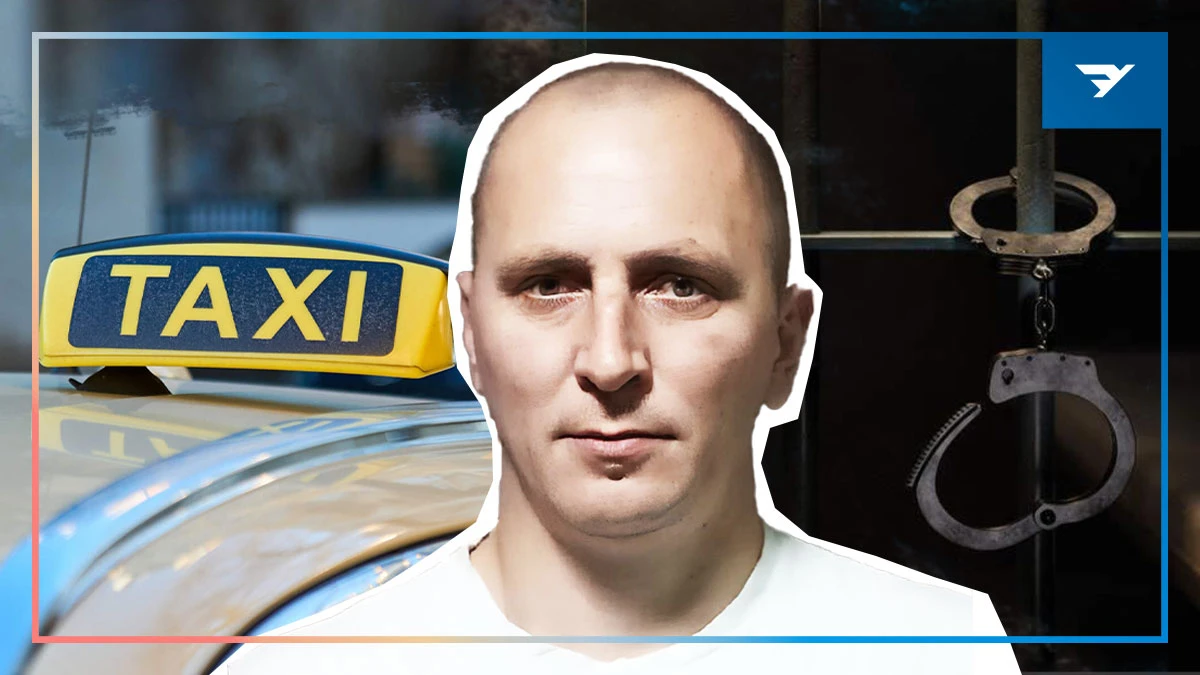
"He cut his wrists so he wouldn't have to work for the occupiers." The story of Volodymyr Yakimenko, a civilian prisoner of war who spent 9 years in captivity
Source: Vgoru
Authors: Olena Hnitetska, Maria Vyshynska
Volodymyr Yakimenko is a taxi driver and “Automaidan” activist from Chaplynka in the Kherson region. After 2014, he engaged in volunteer work and assisted the Ukrainian Armed Forces, as well as helping Crimeans who were leaving the peninsula during the occupation.
Russian security forces detained him on June 11, 2017, as Volodymyr was once again crossing the administrative border with Crimea.
Journalists from “Vgoru” spoke with Diana Chaikovska, Volodymyr Yakimenko’s common-law wife, to learn what he is going through in Russian captivity.
Detention and Coercion to Confess Through Torture
This was not the first time Volodymyr had crossed the Crimean border. He had been checked before and they had tried to recruit him. He refused.
On his latest trip, everything went as usual: two customs checks, a search of the car—even with dogs. But after entering Crimea, he was stopped again—this time for an “additional inspection.”
They “found” a package of drugs in the trunk.
“They detained him immediately. And then the worst began—three days of torture,” said Diana Tchaikovskaya.
For the first few days, they kept Volodymyr in a gas mask, cut off his air supply, beat him, and deprived him of sleep. They didn’t demand explanations about the “found” package—they demanded information about Ukrainian intelligence agencies, positions, and contacts.
He refused. Then they resorted to other methods. They laid him on a table, stripped him of his clothes, and dictated a script for him to recite on camera.
“They wrote out what he was to say about these drugs. They told him: either you say this now—or you’ll be raped. And under such fear, he was forced to do it,” noted Diana Tchaikovskaya.
The beatings were so severe that Volodymyr’s collarbone and nose were broken, and his entire body was covered in bruises. However, the Russian penal colony refused to document his injuries.
“When he asked his lawyer to document the beatings, he was told that it wasn’t admissible as evidence and that they wouldn’t do anything about it,” Diana Tchaikovskaya shared.
The Russian lawyer assigned to Volodymyr did not actually defend him. He was told outright: the case had already been decided, he was “a done deal,” and there would be no acquittal. The only option was to agree to the charges.
The sentence: 15.5 years for drug trafficking.
Like this story? Join our Community and help us share more stories of people living and working in the frontline region of Kherson.
Life in the prison colony: isolation, torture, and resistance
After his transfer, Volodymyr ended up in a prison colony in Pugachov, Saratov Oblast. There, he was placed in the SUS—a unit with harsh conditions of detention. There were 84 people in a room measuring about 70 square meters. They were allowed only three hours of outdoor time per day.
But the worst part is the punishment cell.
“He says he spends up to 30% of his time in the punishment cell. Others might go there once a year, but for him, it’s constant,” said Diana Tchaikovskaya.
Solitary confinement is a small cell for 2–4 people—it’s cold, there’s no proper food, there are mice, and inmates have to sleep on the floor. While for other inmates such conditions are a temporary punishment, Yakimenko is sent there regularly—in fact, every month. The main reason is his refusal to cooperate.
During one of his conflicts with the prison administration, they once again tried to force Volodymyr Yakimenko to work in the sewing workshop. Despite his repeated refusals, the administration insisted that he sew uniforms for Russian security forces.
“He said: ‘How can I sew uniforms for those who are killing my fellow countrymen? I won’t do it,” Diana Chaikovska recounted.
After yet another conversation with the prison warden and his deputy, Volodymyr was taken out to the guard post with his belongings—essentially to subject him to further pressure and coerce him into working. He understood that the next step could be physical abuse or torture to force him to comply.
At that moment, as a form of protest and an attempt to avoid further violence, he cut his veins with a blade. After that, he was taken to the prison infirmary. He did not receive proper medical care: they were not allowed to call an ambulance.
“They said: ‘We need to stitch it up, but we don’t have the supplies and we don’t know how.’ They just rebandaged it,” noted Diana Tchaikovskaya.
After that, Volodymyr was sent to solitary confinement. While in solitary, his condition worsened—he developed a fever above 39° and chills. He was losing consciousness. Other inmates tried to call for help—but no one came.
Treatment was limited to changing his bandages. A few days later, medical care effectively ceased.
Despite his condition, after one period of isolation ended, he was assigned new ones—initially for a few more days, and later for a longer term, in particular due to his refusal to work and his refusal to accept Russian citizenship.
As a result of deep cuts, he has partially lost sensation in his hand, which may indicate tendon damage.
After that incident, Vladimir was allowed to see a lawyer. Eventually, he managed to have Yakimenko removed from the punishment cell and transferred to the special regime unit.
Today, he is not tortured as he was in the early years. But the violence has become a constant. Cold, isolation, lack of food, lack of medical care, humiliation, and constant surveillance—all of this happens every day. In fact, Vladimir has no contact with Ukraine. He is allowed only two care packages per year. Packages do not always arrive; they are often incomplete or delayed. Medications may never reach him. Letters arrive with long delays, and only those sent from within Russia.
His health is deteriorating: the aftereffects of beatings, pain in his collarbone, headaches, and numbness in his arm following an injury. According to him, the food in the prison is extremely poor. The bread is made from feed-grade flour, is sometimes contaminated with mold, and has a pungent odor. Because of this, Volodymyr has constant stomach problems.
He receives no medical treatment whatsoever. When he asked for help, he was told that “there is no one to take him for treatment.”
Even when one of the guards agreed to buy medicine, it was never delivered to him. At the same time, during inspections, the administration shows the commissions that the medications supposedly exist.
“There are no medical examinations, and the medicine may not reach him. He just lives with it,” said Diana Chaikovska.
Once, he asked the administration if he was being treated differently because of his Ukrainian citizenship. In response, he was told: “If you keep asking questions like that, you’ll be in solitary confinement all the time.”
Despite everything, Volodymyr helps others. He shares his belongings and offers support.
Russian propaganda, which can be broadcast all day long, remains the main source of information for prisoners. News from Ukraine reaches them rarely and by chance.
There is no permanent lawyer—it’s too expensive. Assistance is provided only in critical situations.
A Decade of Imprisonment: The Plight of Civilian Prisoners
The story of Volodymyr Yakimenko illustrates how Russia has been exerting pressure on civilians for years. Russia began detaining and fabricating cases against Ukrainian civilians as early as 2014—in Crimea and the temporarily occupied territories. The scenario is almost always the same: detention, torture, “confession,” and sentencing.
The issue of civilian prisoners is one of the least addressed. They are rarely exchanged, and when they are, it’s usually just a few at a time. Vladimir’s civilian wife, Diana, says that what is most exhausting is not even the physical pressure, but the feeling that time doesn’t matter: those who have been in captivity for three or four years are sometimes exchanged. Those who have been held longer—almost never.
According to Diana Tchaikovskaya, even during large-scale exchanges, the majority of those released are people detained after 2022. Those who have been held captive by Russia since 2014–2017 remain behind.
“We need to talk about those who have been there for almost ten years. They’ve given up their youth,” says Volodymyr Yakimenko’s common-law wife.
Authors: Olena Hnitetska, Maria Vyshynska
Volodymyr Yakimenko is a taxi driver and “Automaidan” activist from Chaplynka in the Kherson region. After 2014, he engaged in volunteer work and assisted the Ukrainian Armed Forces, as well as helping Crimeans who were leaving the peninsula during the occupation.
Russian security forces detained him on June 11, 2017, as Volodymyr was once again crossing the administrative border with Crimea.
Journalists from “Vgoru” spoke with Diana Chaikovska, Volodymyr Yakimenko’s common-law wife, to learn what he is going through in Russian captivity.
Detention and Coercion to Confess Through Torture
This was not the first time Volodymyr had crossed the Crimean border. He had been checked before and they had tried to recruit him. He refused.
On his latest trip, everything went as usual: two customs checks, a search of the car—even with dogs. But after entering Crimea, he was stopped again—this time for an “additional inspection.”
They “found” a package of drugs in the trunk.
“They detained him immediately. And then the worst began—three days of torture,” said Diana Tchaikovskaya.
For the first few days, they kept Volodymyr in a gas mask, cut off his air supply, beat him, and deprived him of sleep. They didn’t demand explanations about the “found” package—they demanded information about Ukrainian intelligence agencies, positions, and contacts.
He refused. Then they resorted to other methods. They laid him on a table, stripped him of his clothes, and dictated a script for him to recite on camera.
“They wrote out what he was to say about these drugs. They told him: either you say this now—or you’ll be raped. And under such fear, he was forced to do it,” noted Diana Tchaikovskaya.
The beatings were so severe that Volodymyr’s collarbone and nose were broken, and his entire body was covered in bruises. However, the Russian penal colony refused to document his injuries.
“When he asked his lawyer to document the beatings, he was told that it wasn’t admissible as evidence and that they wouldn’t do anything about it,” Diana Tchaikovskaya shared.
The Russian lawyer assigned to Volodymyr did not actually defend him. He was told outright: the case had already been decided, he was “a done deal,” and there would be no acquittal. The only option was to agree to the charges.
The sentence: 15.5 years for drug trafficking.
Like this story? Join our Community and help us share more stories of people living and working in the frontline region of Kherson.
Life in the prison colony: isolation, torture, and resistance
After his transfer, Volodymyr ended up in a prison colony in Pugachov, Saratov Oblast. There, he was placed in the SUS—a unit with harsh conditions of detention. There were 84 people in a room measuring about 70 square meters. They were allowed only three hours of outdoor time per day.
But the worst part is the punishment cell.
“He says he spends up to 30% of his time in the punishment cell. Others might go there once a year, but for him, it’s constant,” said Diana Tchaikovskaya.
Solitary confinement is a small cell for 2–4 people—it’s cold, there’s no proper food, there are mice, and inmates have to sleep on the floor. While for other inmates such conditions are a temporary punishment, Yakimenko is sent there regularly—in fact, every month. The main reason is his refusal to cooperate.
During one of his conflicts with the prison administration, they once again tried to force Volodymyr Yakimenko to work in the sewing workshop. Despite his repeated refusals, the administration insisted that he sew uniforms for Russian security forces.
“He said: ‘How can I sew uniforms for those who are killing my fellow countrymen? I won’t do it,” Diana Chaikovska recounted.
After yet another conversation with the prison warden and his deputy, Volodymyr was taken out to the guard post with his belongings—essentially to subject him to further pressure and coerce him into working. He understood that the next step could be physical abuse or torture to force him to comply.
At that moment, as a form of protest and an attempt to avoid further violence, he cut his veins with a blade. After that, he was taken to the prison infirmary. He did not receive proper medical care: they were not allowed to call an ambulance.
“They said: ‘We need to stitch it up, but we don’t have the supplies and we don’t know how.’ They just rebandaged it,” noted Diana Tchaikovskaya.
After that, Volodymyr was sent to solitary confinement. While in solitary, his condition worsened—he developed a fever above 39° and chills. He was losing consciousness. Other inmates tried to call for help—but no one came.
Treatment was limited to changing his bandages. A few days later, medical care effectively ceased.
Despite his condition, after one period of isolation ended, he was assigned new ones—initially for a few more days, and later for a longer term, in particular due to his refusal to work and his refusal to accept Russian citizenship.
As a result of deep cuts, he has partially lost sensation in his hand, which may indicate tendon damage.
After that incident, Vladimir was allowed to see a lawyer. Eventually, he managed to have Yakimenko removed from the punishment cell and transferred to the special regime unit.
Today, he is not tortured as he was in the early years. But the violence has become a constant. Cold, isolation, lack of food, lack of medical care, humiliation, and constant surveillance—all of this happens every day. In fact, Vladimir has no contact with Ukraine. He is allowed only two care packages per year. Packages do not always arrive; they are often incomplete or delayed. Medications may never reach him. Letters arrive with long delays, and only those sent from within Russia.
His health is deteriorating: the aftereffects of beatings, pain in his collarbone, headaches, and numbness in his arm following an injury. According to him, the food in the prison is extremely poor. The bread is made from feed-grade flour, is sometimes contaminated with mold, and has a pungent odor. Because of this, Volodymyr has constant stomach problems.
He receives no medical treatment whatsoever. When he asked for help, he was told that “there is no one to take him for treatment.”
Even when one of the guards agreed to buy medicine, it was never delivered to him. At the same time, during inspections, the administration shows the commissions that the medications supposedly exist.
“There are no medical examinations, and the medicine may not reach him. He just lives with it,” said Diana Chaikovska.
Once, he asked the administration if he was being treated differently because of his Ukrainian citizenship. In response, he was told: “If you keep asking questions like that, you’ll be in solitary confinement all the time.”
Despite everything, Volodymyr helps others. He shares his belongings and offers support.
Russian propaganda, which can be broadcast all day long, remains the main source of information for prisoners. News from Ukraine reaches them rarely and by chance.
There is no permanent lawyer—it’s too expensive. Assistance is provided only in critical situations.
A Decade of Imprisonment: The Plight of Civilian Prisoners
The story of Volodymyr Yakimenko illustrates how Russia has been exerting pressure on civilians for years. Russia began detaining and fabricating cases against Ukrainian civilians as early as 2014—in Crimea and the temporarily occupied territories. The scenario is almost always the same: detention, torture, “confession,” and sentencing.
The issue of civilian prisoners is one of the least addressed. They are rarely exchanged, and when they are, it’s usually just a few at a time. Vladimir’s civilian wife, Diana, says that what is most exhausting is not even the physical pressure, but the feeling that time doesn’t matter: those who have been in captivity for three or four years are sometimes exchanged. Those who have been held longer—almost never.
According to Diana Tchaikovskaya, even during large-scale exchanges, the majority of those released are people detained after 2022. Those who have been held captive by Russia since 2014–2017 remain behind.
“We need to talk about those who have been there for almost ten years. They’ve given up their youth,” says Volodymyr Yakimenko’s common-law wife.
This is an automatic translation generated by DeepL.