How to Survive, Rescue Fellow Soldiers in Prison, and Stay Strong: A Military Doctor from Zhytomyr on His Time in Captivity
Source: Suspilne
Author: Yana Sokolivska
Andriy Nayman is a professional military doctor from Zhytomyr who has dedicated his life to the army. Starting in eighth grade, he studied at the Ivan Bohun Lyceum, then went on to the Faculty of Military Medicine and the Ukrainian Military Medical Academy. Andriy began the war as the head of the neurology department at a military hospital in Mariupol. He was later taken prisoner. What is it like to survive, to stay strong, to endure repeated “interrogations,” and yet continue to save his comrades even while confined to a prison barracks?
Read about it in this interview with the Medical Forces Command of the Armed Forces of Ukraine.
How the evacuation from “Azovstal”
took place Our doctors had to make the hardest decisions during the air evacuation from “Azovstal.” I watched as they had to decide who to send out immediately and who to leave behind. And that question of what was practical and appropriate—that weighed on us the most. Prioritizing. You decide who will fly out now and who will stay behind and, perhaps, die. I had a situation where a helicopter landed, the pilots jumped out, and unloaded the supplies. I was in the back of a truck with eight wounded men lying on stretchers. And then I saw the cabin door closing, and the helicopter preparing for takeoff. I started shouting and waving my arms. I told the pilots that I had wounded people who needed to be picked up. It turned out they hadn’t been warned. That day, out of the eight wounded—for whom there’s usually room in the helicopter—I was only able to fit six. And to be honest, I still think about the eyes of those two wounded soldiers I had to leave behind and fly back. In fact, I’ve only faced this situation once, because triage is usually handled by the most experienced surgeon. But I can’t imagine how the surgeons and anesthesiologists, who had to make such decisions, coped with that kind of pressure. I’ll never forget those eyes, which seemed to ask, “Why not me?
”
I was ready to become a soldier even as a child
From my teenage years onward, I prepared myself for military service and lived by the rule, “My home is wherever my backpack is.” Since I wanted to advance in my career—which requires improving my skills and earning higher positions—I viewed Mariupol as a stepping stone in my career. In 2022, I was supposed to be transferred to another hospital—Irpin. Who knows how my life would have turned out if I had moved there. After all, Irpin was also in the zone of fierce fighting.
What was Mariupol like before the Russian army’s
invasion? If we set aside the issue of the environment—a complex and deeply painful one for every resident of Mariupol—the city was wonderful. It was like a billboard for residents of the occupied territories—look how a city can develop in an independent Ukraine under the new rules and laws of decentralization. When money stays in the city, it goes toward creating new parks, recreational areas, waterfronts, and road surfaces, as well as hosting major festivals.
On the first days of the full-scale invasion of Mariupol
Even while in captivity, I spoke with young men who had come from the temporarily occupied territories to study in Mariupol, or who had even enlisted as contract soldiers in units of the National Guard and the Armed Forces of Ukraine. They were drawn to it like moths to a flame; it really was such a vivid showcase of what life in a free Ukraine looks like. And they were surprised that Donetsk—which, during Yanukovych’s time, was positioned as number one—had become a third-rate city compared to Mariupol, which is neither a regional center nor a city with a population of over a million.
In the first days of the full-scale invasion, we discharged all outpatient patients in Mariupol. It became dangerous almost immediately. One of our hospital’s units was dispatched to Volnovakha, and those doctors came under fire from the very first hours. Fortunately, we managed to evacuate the group from there without any casualties. Another mobile hospital provided evacuation support in that direction. That unit still had a line of communication with the mainland, while Mariupol was already being encircled. The medical and nursing team could no longer properly perform the functions of a triage station—stabilizing patients and conducting evacuations—since there was no point in transferring the wounded from the front lines into the encirclement.
How we had to find a way out and treat people while surrounded
By order of the commander, an operational headquarters was established, which included officers from the medical service. The responsibilities of this unit included preparing reports on wounds and injuries. We didn’t know that this was completely pointless, since all the documentation would be destroyed by a direct hit on the hospital. Nevertheless, we carried out our work. Personally, since 2018, I’ve encountered situations where a soldier cannot prove whether he was wounded, when, or how he sustained the injury. Because someone failed to record it, lost the paperwork somewhere, or didn’t fill out the form. And so we did our best until the very end to at least accurately record the soldier’s full identifying information and diagnosis.
For the prisoners of war, the combat stress that had allowed them to ignore pain and injuries for so long had finally subsided. And it became clear that everyone was starting to experience problems. Some had high blood pressure, others had high blood sugar. Some had bruised shoulders, sprained ligaments, or wounds that had begun to scar over, but due to poor sanitation and a shortage of medicine, the condition of the wounded was deteriorating. In the camp, even a minor injury or illness turned into a serious problem. As a medic, I had to get creative. I had to make the most of what we had and use the small supply of medicine we had as effectively as possible. I had to recall the basics of biochemistry. “Will this substance help with this condition? And what’s the best way to use it?” Most of our medications were confiscated during a search because, as it turned out, the Russians were short on supplies. So a packet of Nimisil was split between two or three people, and an ibuprofen tablet was crushed and mixed with acetaminophen to prolong its effect. There was, for example, zinc ointment—and I wondered where it could be used. Because it would run out soon, and there were so many people around who needed treatment. Who needs it more right now?
On the hope of being included in an exchange and how the Russian army tormented people—“they beat everyone”
Every time the Russians and their accomplices came to rewrite and compile the lists, we immediately perked up and thought, “This must be the list for the prisoner exchange.” At the same time, people were taken out of the colony several times—the very first transport took place a month and a half after we arrived. And we were sure that these people were being taken away for an exchange. Only later did we find out that they had been taken to Crimea. Then they took the guys away again—well, that was definitely for an exchange! Then they were brought back—it turned out they’d been taken to the Donetsk pretrial detention center—where they were interrogated and tortured. Eventually, we realized there are signs that indicate you’re actually being held for a prisoner exchange. First of all, they don’t beat you. Or they beat you in a way that leaves no marks.
They beat everyone. Regardless of profession, rank, unit, or health status. They beat the disabled, they beat civilians, they beat military personnel. They beat retirees. The Azov soldiers took the worst of it. While they simply disliked us and tormented us for their own amusement, they tried to destroy them.
How to survive, save comrades in prison, and not break down: a military doctor from Zhytomyr on his time in captivity
On the conditions of captivity and food
I was in Olenivka, Horlivka, and Taganrog. In Olenivka, there was very little food. But even the small amount of food available, they wouldn’t let you eat. They give you one minute to eat and provide you with boiling water. And you think—either I’ll cook everything right now, eat it, and be a little less hungry, or I’ll eat just two or three spoonfuls and then suffer from hunger. When they (Russian soldiers—ed.) told us to stop eating, you had to stand up. And you can’t finish your meal, because if they see you moving around the mess hall with bread or other food in your mouth, they might “work you over.”
“Working you over” means excessive physical exertion. For example, forty “jumps.” This is an exercise where you have to jump, tucking your legs up to your stomach, and land with a thud. After that, your legs won’t hold you up at all. And they give you an impossible task—to run somewhere in 5 seconds. If you don’t do it—more “pumping.” In Taganrog, they made us do squats. We could have to do two or three thousand squats. There’s also the “acceptance test.” They beat you while you’re reciting your personal information. You walk through a human corridor made up of several shifts of guards, and everyone beats you.
In Horlivka, there was already enough food, but it was completely unbalanced. A large amount of fast-acting carbohydrates, combined with a near-total lack of protein and vitamins, makes it seem like you’re full while you’re at the table. But as soon as you get up and run to your local sector, the insulin spike cancels it all out.
And Taganrog—that’s the epitome of it all. Not enough time, not enough food, and the food is of very poor quality. And you realize that this is the so-called “greatness of Russia,” because they feed not only us this way, but also their own citizens, whose guilt has not yet been proven. It’s a pretrial detention center. That’s where the suspects are held. And they’re treated as if they were stray dogs.
Good memories from my life helped me hang
on In Olenivka, a team of doctors was formed, consisting of people who had come from the Illich Plant. This was an initiative of the colony’s administration. There was a medical station there. But among their medical staff, there was only one mobilized doctor, who wasn’t very eager to work. And so, medical care fell to the prisoners themselves.
If I hadn’t had those memories, I would have been like those guys who had never left the city, whose only memories were of the “Desna” training center. And then it turned out that this really does matter. Not geographical knowledge, but rather having good memories that help you hang on. And also your social circle. You choose people who are like you. You talk to each other, trying to analyze together the scraps of information you have. When new prisoners of war were brought in, we questioned them in great detail. Starting with the weather, soccer matches, the situation on the front lines, what weapons they had, how they fired, and what new equipment they’d been given. What the attitude was like, who came to visit, what they said, what they showed us, and what kind of music was playing. In other words, absolutely everything—even the FSB probably didn’t conduct such a thorough interrogation.
How to Survive, Rescue Comrades in Prison, and Stay Strong: A Military Doctor from Zhytomyr on His Time in Captivity
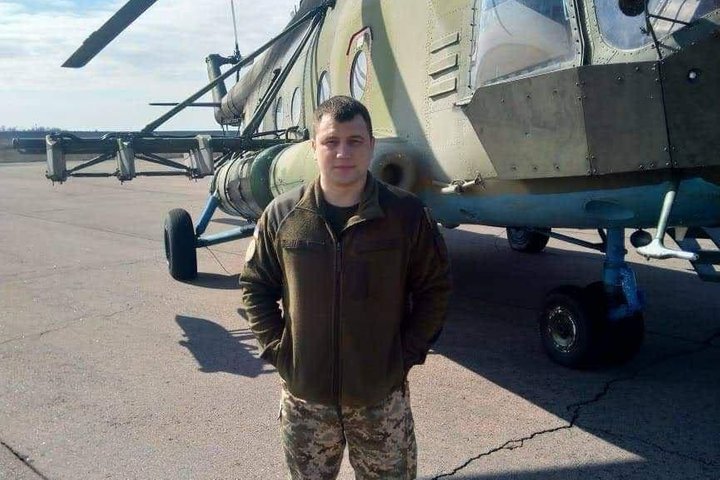
Andriy Naiman, a military doctor from Zhytomyr who was released from captivity. Command of the Medical Forces of the Armed Forces of Ukraine
Sports
were prohibited in captivity Physical exercise was strictly prohibited in captivity. All horizontal bars, parallel bars, and sit-up benches were removed. And if any of the guards found out that a prisoner was doing squats or push-ups, he was sent for “workout.” The goal was to make a person’s muscles atrophy so that, after being exchanged, they would be unable to return to their duties.
On the final moments in captivity
When I was being transferred from Horlivka to the military police, one of the officers tried to intimidate me by saying they were taking me to be executed, while another said, “What execution! It’s for an exchange. Otherwise, they’ll get scared and mess everything up for us...”
“For many people, the war doesn’t exist”
As we were driven through the Sumy region, people stood along the roadsides, waving flags and smiling; some were crying. And in Dnipro, when we were allowed to go out into the city for the first time, I realized that there was no war there. Just everyday life—bars, restaurants. That was the first thing that struck me. For many people, the war doesn’t exist—there are only their own petty interests, which take precedence over everything else.
Advice for medical professionals and future doctors
For those who are just planning to become doctors, my best advice is to take military training, courses in military medicine, and marksmanship courses. This will allow you to be as prepared as possible for your work and to apply your skills in the military. And refresh the knowledge you once gained in lectures on military medicine and surgery. Back when I was in school, I used to wonder, “Why are we learning about these old kits—the large surgical kit, the large dressing kit—that haven’t been used in ages?” But when we found ourselves in Mariupol with nothing and opened up some strategic supply depots, only to find that the only medical supplies there were these kits, you realize that you have to specify exactly how many of these kits you need. Because many locations need these kits, and you have to assess the need to get them—not just so they sit around in bulk. And you need to know what’s in them. And they taught us all that. You just need to refresh your memory on it all.
Earlier, Suspilne reported that in early August 2023, Andriy Naiman, a 30-year-old medical service captain from Zhytomyr who was working in Mariupol, had spent fifteen months in Russian captivity, and his family had appealed to every authority to secure his release.
Author: Yana Sokolivska
Andriy Nayman is a professional military doctor from Zhytomyr who has dedicated his life to the army. Starting in eighth grade, he studied at the Ivan Bohun Lyceum, then went on to the Faculty of Military Medicine and the Ukrainian Military Medical Academy. Andriy began the war as the head of the neurology department at a military hospital in Mariupol. He was later taken prisoner. What is it like to survive, to stay strong, to endure repeated “interrogations,” and yet continue to save his comrades even while confined to a prison barracks?
Read about it in this interview with the Medical Forces Command of the Armed Forces of Ukraine.
How the evacuation from “Azovstal”
took place Our doctors had to make the hardest decisions during the air evacuation from “Azovstal.” I watched as they had to decide who to send out immediately and who to leave behind. And that question of what was practical and appropriate—that weighed on us the most. Prioritizing. You decide who will fly out now and who will stay behind and, perhaps, die. I had a situation where a helicopter landed, the pilots jumped out, and unloaded the supplies. I was in the back of a truck with eight wounded men lying on stretchers. And then I saw the cabin door closing, and the helicopter preparing for takeoff. I started shouting and waving my arms. I told the pilots that I had wounded people who needed to be picked up. It turned out they hadn’t been warned. That day, out of the eight wounded—for whom there’s usually room in the helicopter—I was only able to fit six. And to be honest, I still think about the eyes of those two wounded soldiers I had to leave behind and fly back. In fact, I’ve only faced this situation once, because triage is usually handled by the most experienced surgeon. But I can’t imagine how the surgeons and anesthesiologists, who had to make such decisions, coped with that kind of pressure. I’ll never forget those eyes, which seemed to ask, “Why not me?
”
I was ready to become a soldier even as a child
From my teenage years onward, I prepared myself for military service and lived by the rule, “My home is wherever my backpack is.” Since I wanted to advance in my career—which requires improving my skills and earning higher positions—I viewed Mariupol as a stepping stone in my career. In 2022, I was supposed to be transferred to another hospital—Irpin. Who knows how my life would have turned out if I had moved there. After all, Irpin was also in the zone of fierce fighting.
What was Mariupol like before the Russian army’s
invasion? If we set aside the issue of the environment—a complex and deeply painful one for every resident of Mariupol—the city was wonderful. It was like a billboard for residents of the occupied territories—look how a city can develop in an independent Ukraine under the new rules and laws of decentralization. When money stays in the city, it goes toward creating new parks, recreational areas, waterfronts, and road surfaces, as well as hosting major festivals.
On the first days of the full-scale invasion of Mariupol
Even while in captivity, I spoke with young men who had come from the temporarily occupied territories to study in Mariupol, or who had even enlisted as contract soldiers in units of the National Guard and the Armed Forces of Ukraine. They were drawn to it like moths to a flame; it really was such a vivid showcase of what life in a free Ukraine looks like. And they were surprised that Donetsk—which, during Yanukovych’s time, was positioned as number one—had become a third-rate city compared to Mariupol, which is neither a regional center nor a city with a population of over a million.
In the first days of the full-scale invasion, we discharged all outpatient patients in Mariupol. It became dangerous almost immediately. One of our hospital’s units was dispatched to Volnovakha, and those doctors came under fire from the very first hours. Fortunately, we managed to evacuate the group from there without any casualties. Another mobile hospital provided evacuation support in that direction. That unit still had a line of communication with the mainland, while Mariupol was already being encircled. The medical and nursing team could no longer properly perform the functions of a triage station—stabilizing patients and conducting evacuations—since there was no point in transferring the wounded from the front lines into the encirclement.
How we had to find a way out and treat people while surrounded
By order of the commander, an operational headquarters was established, which included officers from the medical service. The responsibilities of this unit included preparing reports on wounds and injuries. We didn’t know that this was completely pointless, since all the documentation would be destroyed by a direct hit on the hospital. Nevertheless, we carried out our work. Personally, since 2018, I’ve encountered situations where a soldier cannot prove whether he was wounded, when, or how he sustained the injury. Because someone failed to record it, lost the paperwork somewhere, or didn’t fill out the form. And so we did our best until the very end to at least accurately record the soldier’s full identifying information and diagnosis.
For the prisoners of war, the combat stress that had allowed them to ignore pain and injuries for so long had finally subsided. And it became clear that everyone was starting to experience problems. Some had high blood pressure, others had high blood sugar. Some had bruised shoulders, sprained ligaments, or wounds that had begun to scar over, but due to poor sanitation and a shortage of medicine, the condition of the wounded was deteriorating. In the camp, even a minor injury or illness turned into a serious problem. As a medic, I had to get creative. I had to make the most of what we had and use the small supply of medicine we had as effectively as possible. I had to recall the basics of biochemistry. “Will this substance help with this condition? And what’s the best way to use it?” Most of our medications were confiscated during a search because, as it turned out, the Russians were short on supplies. So a packet of Nimisil was split between two or three people, and an ibuprofen tablet was crushed and mixed with acetaminophen to prolong its effect. There was, for example, zinc ointment—and I wondered where it could be used. Because it would run out soon, and there were so many people around who needed treatment. Who needs it more right now?
On the hope of being included in an exchange and how the Russian army tormented people—“they beat everyone”
Every time the Russians and their accomplices came to rewrite and compile the lists, we immediately perked up and thought, “This must be the list for the prisoner exchange.” At the same time, people were taken out of the colony several times—the very first transport took place a month and a half after we arrived. And we were sure that these people were being taken away for an exchange. Only later did we find out that they had been taken to Crimea. Then they took the guys away again—well, that was definitely for an exchange! Then they were brought back—it turned out they’d been taken to the Donetsk pretrial detention center—where they were interrogated and tortured. Eventually, we realized there are signs that indicate you’re actually being held for a prisoner exchange. First of all, they don’t beat you. Or they beat you in a way that leaves no marks.
They beat everyone. Regardless of profession, rank, unit, or health status. They beat the disabled, they beat civilians, they beat military personnel. They beat retirees. The Azov soldiers took the worst of it. While they simply disliked us and tormented us for their own amusement, they tried to destroy them.
How to survive, save comrades in prison, and not break down: a military doctor from Zhytomyr on his time in captivity
On the conditions of captivity and food
I was in Olenivka, Horlivka, and Taganrog. In Olenivka, there was very little food. But even the small amount of food available, they wouldn’t let you eat. They give you one minute to eat and provide you with boiling water. And you think—either I’ll cook everything right now, eat it, and be a little less hungry, or I’ll eat just two or three spoonfuls and then suffer from hunger. When they (Russian soldiers—ed.) told us to stop eating, you had to stand up. And you can’t finish your meal, because if they see you moving around the mess hall with bread or other food in your mouth, they might “work you over.”
“Working you over” means excessive physical exertion. For example, forty “jumps.” This is an exercise where you have to jump, tucking your legs up to your stomach, and land with a thud. After that, your legs won’t hold you up at all. And they give you an impossible task—to run somewhere in 5 seconds. If you don’t do it—more “pumping.” In Taganrog, they made us do squats. We could have to do two or three thousand squats. There’s also the “acceptance test.” They beat you while you’re reciting your personal information. You walk through a human corridor made up of several shifts of guards, and everyone beats you.
In Horlivka, there was already enough food, but it was completely unbalanced. A large amount of fast-acting carbohydrates, combined with a near-total lack of protein and vitamins, makes it seem like you’re full while you’re at the table. But as soon as you get up and run to your local sector, the insulin spike cancels it all out.
And Taganrog—that’s the epitome of it all. Not enough time, not enough food, and the food is of very poor quality. And you realize that this is the so-called “greatness of Russia,” because they feed not only us this way, but also their own citizens, whose guilt has not yet been proven. It’s a pretrial detention center. That’s where the suspects are held. And they’re treated as if they were stray dogs.
Good memories from my life helped me hang
on In Olenivka, a team of doctors was formed, consisting of people who had come from the Illich Plant. This was an initiative of the colony’s administration. There was a medical station there. But among their medical staff, there was only one mobilized doctor, who wasn’t very eager to work. And so, medical care fell to the prisoners themselves.
If I hadn’t had those memories, I would have been like those guys who had never left the city, whose only memories were of the “Desna” training center. And then it turned out that this really does matter. Not geographical knowledge, but rather having good memories that help you hang on. And also your social circle. You choose people who are like you. You talk to each other, trying to analyze together the scraps of information you have. When new prisoners of war were brought in, we questioned them in great detail. Starting with the weather, soccer matches, the situation on the front lines, what weapons they had, how they fired, and what new equipment they’d been given. What the attitude was like, who came to visit, what they said, what they showed us, and what kind of music was playing. In other words, absolutely everything—even the FSB probably didn’t conduct such a thorough interrogation.
How to Survive, Rescue Comrades in Prison, and Stay Strong: A Military Doctor from Zhytomyr on His Time in Captivity
Andriy Naiman, a military doctor from Zhytomyr who was released from captivity. Command of the Medical Forces of the Armed Forces of Ukraine
Sports
were prohibited in captivity Physical exercise was strictly prohibited in captivity. All horizontal bars, parallel bars, and sit-up benches were removed. And if any of the guards found out that a prisoner was doing squats or push-ups, he was sent for “workout.” The goal was to make a person’s muscles atrophy so that, after being exchanged, they would be unable to return to their duties.
On the final moments in captivity
When I was being transferred from Horlivka to the military police, one of the officers tried to intimidate me by saying they were taking me to be executed, while another said, “What execution! It’s for an exchange. Otherwise, they’ll get scared and mess everything up for us...”
“For many people, the war doesn’t exist”
As we were driven through the Sumy region, people stood along the roadsides, waving flags and smiling; some were crying. And in Dnipro, when we were allowed to go out into the city for the first time, I realized that there was no war there. Just everyday life—bars, restaurants. That was the first thing that struck me. For many people, the war doesn’t exist—there are only their own petty interests, which take precedence over everything else.
Advice for medical professionals and future doctors
For those who are just planning to become doctors, my best advice is to take military training, courses in military medicine, and marksmanship courses. This will allow you to be as prepared as possible for your work and to apply your skills in the military. And refresh the knowledge you once gained in lectures on military medicine and surgery. Back when I was in school, I used to wonder, “Why are we learning about these old kits—the large surgical kit, the large dressing kit—that haven’t been used in ages?” But when we found ourselves in Mariupol with nothing and opened up some strategic supply depots, only to find that the only medical supplies there were these kits, you realize that you have to specify exactly how many of these kits you need. Because many locations need these kits, and you have to assess the need to get them—not just so they sit around in bulk. And you need to know what’s in them. And they taught us all that. You just need to refresh your memory on it all.
Earlier, Suspilne reported that in early August 2023, Andriy Naiman, a 30-year-old medical service captain from Zhytomyr who was working in Mariupol, had spent fifteen months in Russian captivity, and his family had appealed to every authority to secure his release.
This is an automatic translation generated by DeepL.