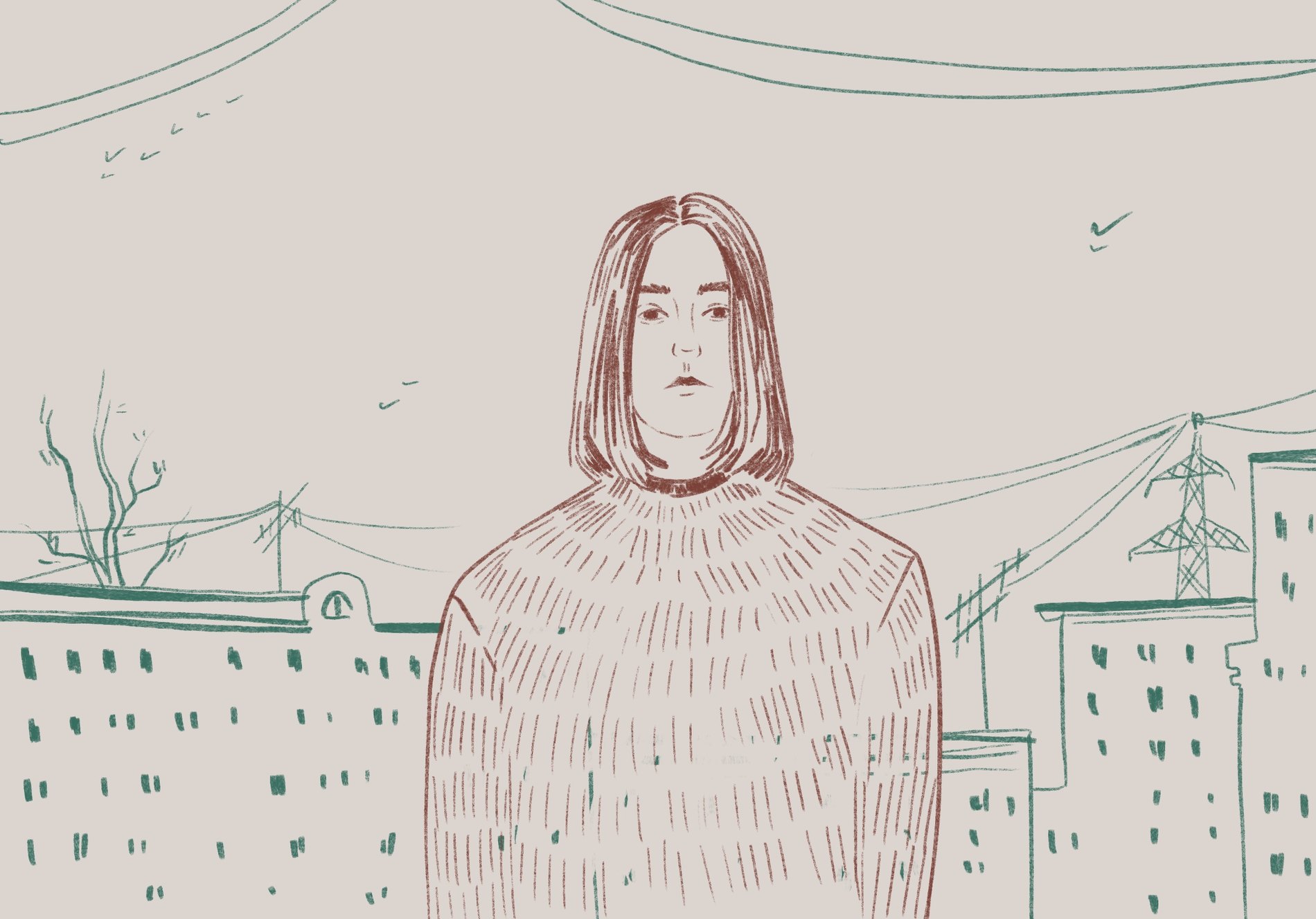
My hometown is becoming a foreign place. I have been living in occupied Kherson since the start of the war
Source: Wonderzine
Text: Kateryna Yanchenko
In early March 2022, Russian troops occupied Kherson. Residents took to the streets almost immediately to declare, “Kherson is Ukraine,” refused to accept humanitarian aid from the invaders, and asked them to go home “while they’re still alive.”
However, Russian soldiers have taken over the city and the region and, it seems, intend to stay there for the long haul. Our heroine, Maria, describes what it’s like to live under this “quiet” occupation and how much the city has changed over the past two months. Since the start of the war, she has remained in Kherson with her parents, volunteering, and recently resumed working at a coffee shop. She explains the situation regarding evacuation, propaganda, and the referendum, and also shares the fears that have arisen during the war.
The protagonist’s name has been changed for her safety.
We speak with Maria on Zoom; she thanks us for not forgetting the people of Kherson. She also smiles a lot and speaks Ukrainian beautifully, a language she is gradually transitioning to.
The Start of the War
I’m embarrassed to admit it, but on February 24, I played *The Sims 4* all night and fell asleep at 5 a.m. At 7 a.m., my dad woke me up, saying, “Wake up, they’re shooting at us.” My dad jokes around a lot, so I thought he was joking this time, too. But then I heard explosions on the street. I didn’t believe it was war until the very end. I thought maybe it was just construction noise until I went online and started reading the news.
Neither I nor my family were prepared for this. Before the war, I didn’t watch the news—which, even months earlier, had been reporting on a possible invasion and urging people to pack emergency bags—so I really regret that. I was one of those people who said that a full-scale invasion would never happen in the 21st century. But here we are.
My family hadn’t planned on leaving. We stayed in our apartment and waited for updates on what would happen next. Kherson was one of the first cities to be overrun by Russian troops.
To be honest, I envy the people who panicked back then, quickly packed their things, and left. My parents kept saying that everything would be fine, so we’re still living here, under occupation
At first, I didn’t understand what had happened. It felt like a temporary skirmish; it was hard to grasp the full scale of what was going on. Yes, I panicked—it was very scary, just like it was for all of us—but I hoped the war would end quickly. Now, after two months of living like this, my mental state has deteriorated significantly. I used to suffer from depression, and it’s resurfacing now: I find myself crying often again, not knowing what to do or how to feel. The question keeps running through my head: should I leave or not? It’s scary here. Perhaps this uncertainty—not knowing where or how to evacuate, or what the future holds for me—is what terrifies me the most.
Evacuation
Routes At the start of the war, we were terrified and didn’t leave the house for 4–5 days. That was exactly when the occupation of the city began. At first, people were able to leave, but even then there were long lines at gas stations; very soon, fuel ran out and food shortages set in. After that, it was simply too dangerous to go anywhere, since the Russians had occupied both the city and the region. During this time, there wasn’t a single “green corridor,” so if people from Kherson are leaving at all, they’re doing so only via unofficial routes. People are looking for others planning to evacuate in the city’s chat groups, carpooling, and heading together to Mykolaiv and Odesa. But this is dangerous; there’s a high probability that you could come under fire.
On top of that, you have to pass through many Russian checkpoints, where they’ll search you, inspect your car and phones, read your messages, and gather all the information about the passengers. They spend about 30–40 minutes on each car. And if you’re a civilian and show no signs of suspicion, they’ll let you through.
During this time, there hasn’t been a single “green corridor,” so if people from Kherson are leaving at all, it’s only through unofficial routes. But there’s a high probability that you could come under fire
How the City Has
Changed There’s a lot of Russian military equipment in Kherson—and, consequently, a lot of soldiers. Every 3–4 streets in the city have checkpoints where they inspect belongings and documents. If you’re traveling by car or public transportation, soldiers may search you. Or they might even take your car and drive off somewhere, claiming they’ll return it in three days. Once, my friend was pulled off a bus and forced to undress so they could check for tattoos. They don’t hassle women as much as men, but they do check their phones.
I work at a coffee shop in the city center, and in a single day I might see up to 20 military vehicles with Z symbols driving by. Russian soldiers are everywhere. They go to markets and stores to take (and sometimes buy) food, cigarettes, lots of vodka, and Ukrainian SIM cards. They hang out in coffee shops, get their hair cut at barbershops—wherever you look, there are soldiers with weapons all around.
In the early days of the war, there was a lot of looting. As sad as it is to say, it wasn’t just the Russians who resorted to this—the city’s residents did too. They robbed apartments, stores, and coffee shops; they even broke into a flower shop and set fire to the city’s central market. At first, the people of Kherson were outraged by this behavior and caught the looters, but now it has all died down. There hasn’t been a police presence in the city for a long time. There are security guards who simply document crimes but don’t respond to calls. There have been instances when neighbors were making a lot of noise, and I had to call 102. As a result, Russian soldiers showed up.
In a single day, I might see up to 20 military vehicles with Z symbols driving by. Russian soldiers are everywhere
As for the humanitarian situation, there was no food in the first days of the war. The occupiers deliberately blocked the passage of Ukrainian humanitarian convoys so that people would take food from them. Later, they began letting some trucks from the Kherson region carrying food through. For about two weeks, people stood in long lines for food; it took 3–4 hours just to buy bread.Much of the merchandise in stores came from Crimea, and prices skyrocketed by 2–4 times. Cigarettes cost 150 hryvnias, and you have to pay the same amount for a kilogram of bananas and citrus fruits. Sausages can be bought for 200–300 hryvnias. I don’t know if it’s true, but they say that even ATB is selling Russian cigarettes. And at some gas stations in the Kherson region, people are paying with rubles. There are a lot of products from Russia, and people are forced to buy them because there are almost no other products available.
Before, when Russian humanitarian aid was brought in, no one went to get it. People in Kherson were very outraged if anyone took anything from it. But now, after two months of occupation, people have run out of money, so there are long lines there. I don’t know how to feel about this. On the one hand, I understand people who can’t afford to buy food, but on the other hand, it’s all being handed out by the occupiers. However, I strongly condemn people who take food from the Russian humanitarian aid and sell it at the market. There have already been such cases, and when people see this, a “people’s court” takes place. My father once called out a man at the market and told him to get out of there as quickly as possible.
The Russians also go door to door, finding elderly people who can’t take care of themselves, and ask what they need. Then they bring food. I know that one elderly woman asked them for heart medication, but they gave her some vitamins, like ascorbic acid. While there are more or less no problems with food right now and trade has gotten back on track, the situation with medications is different. There are almost none in the city; all the pharmacies sold out their stock back on February 24–25, and nothing has been delivered since. Medications can be found in Russian humanitarian aid shipments, but they only contain basic pills, such as those for headaches. That’s why volunteers are helping residents by organizing deliveries of orders from Odesa or Mykolaiv or by picking everything up themselves.
Earlier, when Russian humanitarian aid was delivered, no one went to get it. But now, after two months of occupation, people have run out of money, so the lines there are long.
I’m a volunteer too, and when I ordered a specific list of items from Odesa, I was warned right away: be prepared for the possibility that only part of it might arrive—for example, there won’t be any painkillers. Fortunately, they delivered everything we needed, and we distributed the medicine to people. There’s a noticeable shortage of hygiene products: sanitary pads, diapers. We’re trying to find them somewhere or order them.
Many people have lost their jobs because of the war, including my dad. My mom continues to work as an accountant, and I’ve gone back to work at a coffee shop. Things are slowly starting to reopen in Kherson, but no one has enough money to live the way they used to.
A Way to Take My Mind Off Things
To take my mind off things, I play stress-relief games on my phone—games that require a lot of tapping and thinking. My job and volunteering really help. When I’m volunteering, I don’t have any time to think about anything at all. I have to run from one line to another to buy vegetables, pack them up in three hours, and then deliver everything to people. At the end of the day, I fall into a deep sleep. But if you don’t have internet or a job, and you’re constantly stuck in your apartment, it really takes a toll on your mental state. My friend lives in those conditions and admits she can’t take it anymore—she sleeps a lot, is constantly tired, and feels powerless.
Volunteering
I was actively volunteering even before the war, so for me, there was no question of whether or not to help this time—I just knew I’d do whatever I could. One day, a friend called me and said she was planning to raise money to help the elderly, single mothers, and large families. I didn’t have a job at the time, so I volunteered to buy and deliver food and stand in line. That’s how we work: she sends money to my card, I find cash somewhere (which is a problem because you can’t withdraw it anywhere), and then I buy food and other necessities.
The quieter you are in Kherson, the better things will be for you
Elderly women sometimes say they have no food and haven’t eaten in two days. One elderly woman gave me a knitted doll, and another gave me shampoo samples. It’s very sweet and heartwarming. At moments like these, I feel that my help is not in vain.
In the early days, there were a lot of volunteers, and many small and medium-sized businesses were delivering everything needed to hospitals, civil defense units, and so on. Everyone helped whenever they could. At the same time, the Russians were kidnapping many volunteers or intimidating residents into accepting food specifically from them. That’s why we don’t publicly disclose who exactly is helping, where we work, or who we’re helping. We’re afraid that “guests” will come for us. The quieter you are in Kherson, the better off you’ll be. Right now, the main goal regarding Kherson and the region is a quiet occupation, not military action.
Protests and Propaganda
At the start of the war, we took to the streets en masse to protest against the occupiers. I’d never seen so many people in the city square—everyone was really united. But they started breaking up the most recent rallies, throwing tear gas and stun grenades—they even fired shots and wounded an elderly man. Then the Russians said the city center belongs to them, so there’s always a curfew there. And if anyone tries to go to a rally, they’ll open fire. The protest site was moved a little further away, but not as many people are gathering there anymore. We realized that it’s pointless, and many people are being abducted.
Why, in principle, isn’t Kherson being bombed right now like other cities, and why aren’t we putting up a fight like other cities? First of all, the Russian military is already in the city. There have been attempts at guerrilla warfare, but they didn’t end well. For example, in my neighborhood, people fired at their vehicles and equipment from a building. Soon after, the Russians retaliated: they shelled the building where people were inside, hitting it between the 6th and 7th floors. Those apartments were destroyed; one person died, and many were wounded. A family with a 2-week-old baby was living on the seventh floor. Fortunately, they survived, and we’re helping them as volunteers. In total, there are about 3–4 buildings in that area with no windows, where people have been left homeless and need help. I don’t know if the Russians warned us about this or if we’ve already figured it out ourselves: if we put up resistance, civilians will suffer.
The Russian military wants to hold a referendum. They’re handing out all kinds of propaganda leaflets and strongly encouraging collaboration. I don’t want to say much on this topic, but there are people in the city who are cooperating with them, and these aren’t isolated cases, unfortunately. I recently went back to work at the coffee shop, and a man came in, ordered a coffee, and said he’d stay for a while. Then he started asking about the situation in Kherson, claiming he’d just arrived from Mykolaiv and didn’t know what was happening here. At the same time, many of the occupiers are changing into civilian clothes and walking around town, asking people questions and eavesdropping on conversations. So I realized: something wasn’t right here. I replied that everything was fine in the city—there were only minor issues with food. A few hours later, three soldiers with assault rifles came into the café, asking how we were doing and if we needed anything.
In Kherson, you have to be very careful and vigilant. When you go out into the city, be sure to clear your phones, because the occupiers are looking for any signs that you oppose their rule. You also have to watch closely what you say, where, and to whom. The only safe place where you can speak freely is your apartment—and even that’s not guaranteed.
I don’t think anyone turns on the TV these days, since all the channels are Russian. Radio lasted longer—we were able to pick up Ukrainian stations for about a month, but they were shut down too. My family and I read the news online. We’re lucky: we have good internet, so we can communicate and stay in touch with our loved ones. In some areas of Kherson, this isn’t possible; about a third of the homes have very slow Wi-Fi, so you have to wait a long time to watch a video.
There were days when my parents and I sat in our apartment, knowing nothing. Meanwhile, my grandmother and aunt were in an occupied village in the Mykolaiv region. Their house was bombed, and they lived in basements for several weeks without water, gas, or electricity—and with almost no food. That village is heavily bombed, but they managed to evacuate. We talked to them every four days. A friend of my mom’s would ride his bike out to them, find out how they were doing, then climb up to a certain floor of a building, get a cell signal, and relay everything to us, and we’d reply to him. That’s how we communicated for a month. Now they’re in a village controlled by Ukraine, and we talk directly on the phone.
When my grandmother’s and aunt’s house was bombed, it was very painful, and even now I feel like crying. That’s the house of my childhood; my relatives lived there their whole lives
Unfortunately, we can’t go there to assess the situation or find out if it can be rebuilt. Several more streets in that village have been destroyed. One of the men went to the Russians and told them they’d destroyed his house, asking them to do something about it. They gave him some roofing shingles they’d looted from a store. It’s pitiful.
On the fears I’ve developed
We’re not in a combat zone; we’re under a “quiet” occupation, so perhaps my fears differ from those of other people who are under constant shelling.
First and foremost, I feel a terrible sense of danger; I’m afraid to say anything on the street or talk to strangers, and I’m always on guard. When someone approaches me, I walk away and try not to start a conversation. I’m afraid of loud noises, especially from large vehicles like milk trucks or garbage trucks—because they remind me of Russian military vehicles. Whenever I hear something like that, I turn around and look around to check if anyone is coming.
I’ve also developed a strong fear of empty shelves in stores. I always want to stock up on everything, even if the food will spoil in my fridge and I won’t eat it. I buy it because it’s important to me to know that I have something. And if there’s no food again, I’ll be able to get by. Against this backdrop, I’ve started overeating seriously; many people in the city have the same problem. It’s a state where you eat and can’t stop because you think it’s your last meal.
I never wanted to leave Kherson. That’s why we’re holding out until the very end, but I guess we have to move on.
I don’t know how to plan for the future—whether the Kherson People’s Republic will be established or not. According to preliminary data, nearly a third of the city’s residents have left, but I think the number is much higher. My family is currently torn between evacuating and staying. First, it’s dangerous, and second, we might not be able to come back here again. That’s how your hometown becomes a foreign place. If we knew we just had to endure an hour, a day, or a week, it would be easier. But this uncertainty is more terrifying than the Russian troops in the city.
No one in Kherson wants Russian rule. The city is predominantly Russian-speaking, but there’s no one here who needs saving. No one was expecting the Russians; we lived perfectly well under Ukrainian rule, and we’re still a Ukrainian city—but we’re under temporary occupation. People are against the creation of the Kherson People’s Republic, and that’s one of the reasons why they’re leaving. If that happens, life in Kherson won’t be normal.
My family and I are afraid of the consequences of the city and region being liberated. The Russians won’t just hand us over—this will be a turning point in this war. They’re still in the region, in or near various villages. Russian military vehicles head out into the fields, fire at Mykolaiv or Odesa; a few minutes later, our forces return fire, and the Russians retreat. The liberation won’t be peaceful. If the occupiers from the region start gathering in Kherson, that will be the first sign that the Ukrainian Armed Forces are coming to liberate us. We’re bracing ourselves for fierce fighting. I live on the 9th floor, so my building will be one of the first to come under fire.
Weighing all these facts, my family is trying to figure out the best course of action. We were offered housing in Odesa, but pets aren’t allowed there. By the way, they aren’t always accepted even during unofficial evacuations from Kherson. People think it creates extra problems: you need a carrier, sedatives, and so on. That’s why sometimes people in Kherson give their pets to friends and relatives. Many give them to shelters, which are currently overcrowded and need help themselves, so that’s irresponsible. If we have to leave, my grandmother will take the cats. I’m arguing with my parents because I want to take them with me. They’re my family too—I’m ready to carry them in my arms.
We have an apartment and a car in Kherson—our whole life is in this city. I never wanted to leave here. That’s why we’re holding on until the very end, but I guess we have to move on.
Text: Kateryna Yanchenko
In early March 2022, Russian troops occupied Kherson. Residents took to the streets almost immediately to declare, “Kherson is Ukraine,” refused to accept humanitarian aid from the invaders, and asked them to go home “while they’re still alive.”
However, Russian soldiers have taken over the city and the region and, it seems, intend to stay there for the long haul. Our heroine, Maria, describes what it’s like to live under this “quiet” occupation and how much the city has changed over the past two months. Since the start of the war, she has remained in Kherson with her parents, volunteering, and recently resumed working at a coffee shop. She explains the situation regarding evacuation, propaganda, and the referendum, and also shares the fears that have arisen during the war.
The protagonist’s name has been changed for her safety.
We speak with Maria on Zoom; she thanks us for not forgetting the people of Kherson. She also smiles a lot and speaks Ukrainian beautifully, a language she is gradually transitioning to.
The Start of the War
I’m embarrassed to admit it, but on February 24, I played *The Sims 4* all night and fell asleep at 5 a.m. At 7 a.m., my dad woke me up, saying, “Wake up, they’re shooting at us.” My dad jokes around a lot, so I thought he was joking this time, too. But then I heard explosions on the street. I didn’t believe it was war until the very end. I thought maybe it was just construction noise until I went online and started reading the news.
Neither I nor my family were prepared for this. Before the war, I didn’t watch the news—which, even months earlier, had been reporting on a possible invasion and urging people to pack emergency bags—so I really regret that. I was one of those people who said that a full-scale invasion would never happen in the 21st century. But here we are.
My family hadn’t planned on leaving. We stayed in our apartment and waited for updates on what would happen next. Kherson was one of the first cities to be overrun by Russian troops.
To be honest, I envy the people who panicked back then, quickly packed their things, and left. My parents kept saying that everything would be fine, so we’re still living here, under occupation
At first, I didn’t understand what had happened. It felt like a temporary skirmish; it was hard to grasp the full scale of what was going on. Yes, I panicked—it was very scary, just like it was for all of us—but I hoped the war would end quickly. Now, after two months of living like this, my mental state has deteriorated significantly. I used to suffer from depression, and it’s resurfacing now: I find myself crying often again, not knowing what to do or how to feel. The question keeps running through my head: should I leave or not? It’s scary here. Perhaps this uncertainty—not knowing where or how to evacuate, or what the future holds for me—is what terrifies me the most.
Evacuation
Routes At the start of the war, we were terrified and didn’t leave the house for 4–5 days. That was exactly when the occupation of the city began. At first, people were able to leave, but even then there were long lines at gas stations; very soon, fuel ran out and food shortages set in. After that, it was simply too dangerous to go anywhere, since the Russians had occupied both the city and the region. During this time, there wasn’t a single “green corridor,” so if people from Kherson are leaving at all, they’re doing so only via unofficial routes. People are looking for others planning to evacuate in the city’s chat groups, carpooling, and heading together to Mykolaiv and Odesa. But this is dangerous; there’s a high probability that you could come under fire.
On top of that, you have to pass through many Russian checkpoints, where they’ll search you, inspect your car and phones, read your messages, and gather all the information about the passengers. They spend about 30–40 minutes on each car. And if you’re a civilian and show no signs of suspicion, they’ll let you through.
During this time, there hasn’t been a single “green corridor,” so if people from Kherson are leaving at all, it’s only through unofficial routes. But there’s a high probability that you could come under fire
How the City Has
Changed There’s a lot of Russian military equipment in Kherson—and, consequently, a lot of soldiers. Every 3–4 streets in the city have checkpoints where they inspect belongings and documents. If you’re traveling by car or public transportation, soldiers may search you. Or they might even take your car and drive off somewhere, claiming they’ll return it in three days. Once, my friend was pulled off a bus and forced to undress so they could check for tattoos. They don’t hassle women as much as men, but they do check their phones.
I work at a coffee shop in the city center, and in a single day I might see up to 20 military vehicles with Z symbols driving by. Russian soldiers are everywhere. They go to markets and stores to take (and sometimes buy) food, cigarettes, lots of vodka, and Ukrainian SIM cards. They hang out in coffee shops, get their hair cut at barbershops—wherever you look, there are soldiers with weapons all around.
In the early days of the war, there was a lot of looting. As sad as it is to say, it wasn’t just the Russians who resorted to this—the city’s residents did too. They robbed apartments, stores, and coffee shops; they even broke into a flower shop and set fire to the city’s central market. At first, the people of Kherson were outraged by this behavior and caught the looters, but now it has all died down. There hasn’t been a police presence in the city for a long time. There are security guards who simply document crimes but don’t respond to calls. There have been instances when neighbors were making a lot of noise, and I had to call 102. As a result, Russian soldiers showed up.
In a single day, I might see up to 20 military vehicles with Z symbols driving by. Russian soldiers are everywhere
As for the humanitarian situation, there was no food in the first days of the war. The occupiers deliberately blocked the passage of Ukrainian humanitarian convoys so that people would take food from them. Later, they began letting some trucks from the Kherson region carrying food through. For about two weeks, people stood in long lines for food; it took 3–4 hours just to buy bread.Much of the merchandise in stores came from Crimea, and prices skyrocketed by 2–4 times. Cigarettes cost 150 hryvnias, and you have to pay the same amount for a kilogram of bananas and citrus fruits. Sausages can be bought for 200–300 hryvnias. I don’t know if it’s true, but they say that even ATB is selling Russian cigarettes. And at some gas stations in the Kherson region, people are paying with rubles. There are a lot of products from Russia, and people are forced to buy them because there are almost no other products available.
Before, when Russian humanitarian aid was brought in, no one went to get it. People in Kherson were very outraged if anyone took anything from it. But now, after two months of occupation, people have run out of money, so there are long lines there. I don’t know how to feel about this. On the one hand, I understand people who can’t afford to buy food, but on the other hand, it’s all being handed out by the occupiers. However, I strongly condemn people who take food from the Russian humanitarian aid and sell it at the market. There have already been such cases, and when people see this, a “people’s court” takes place. My father once called out a man at the market and told him to get out of there as quickly as possible.
The Russians also go door to door, finding elderly people who can’t take care of themselves, and ask what they need. Then they bring food. I know that one elderly woman asked them for heart medication, but they gave her some vitamins, like ascorbic acid. While there are more or less no problems with food right now and trade has gotten back on track, the situation with medications is different. There are almost none in the city; all the pharmacies sold out their stock back on February 24–25, and nothing has been delivered since. Medications can be found in Russian humanitarian aid shipments, but they only contain basic pills, such as those for headaches. That’s why volunteers are helping residents by organizing deliveries of orders from Odesa or Mykolaiv or by picking everything up themselves.
Earlier, when Russian humanitarian aid was delivered, no one went to get it. But now, after two months of occupation, people have run out of money, so the lines there are long.
I’m a volunteer too, and when I ordered a specific list of items from Odesa, I was warned right away: be prepared for the possibility that only part of it might arrive—for example, there won’t be any painkillers. Fortunately, they delivered everything we needed, and we distributed the medicine to people. There’s a noticeable shortage of hygiene products: sanitary pads, diapers. We’re trying to find them somewhere or order them.
Many people have lost their jobs because of the war, including my dad. My mom continues to work as an accountant, and I’ve gone back to work at a coffee shop. Things are slowly starting to reopen in Kherson, but no one has enough money to live the way they used to.
A Way to Take My Mind Off Things
To take my mind off things, I play stress-relief games on my phone—games that require a lot of tapping and thinking. My job and volunteering really help. When I’m volunteering, I don’t have any time to think about anything at all. I have to run from one line to another to buy vegetables, pack them up in three hours, and then deliver everything to people. At the end of the day, I fall into a deep sleep. But if you don’t have internet or a job, and you’re constantly stuck in your apartment, it really takes a toll on your mental state. My friend lives in those conditions and admits she can’t take it anymore—she sleeps a lot, is constantly tired, and feels powerless.
Volunteering
I was actively volunteering even before the war, so for me, there was no question of whether or not to help this time—I just knew I’d do whatever I could. One day, a friend called me and said she was planning to raise money to help the elderly, single mothers, and large families. I didn’t have a job at the time, so I volunteered to buy and deliver food and stand in line. That’s how we work: she sends money to my card, I find cash somewhere (which is a problem because you can’t withdraw it anywhere), and then I buy food and other necessities.
The quieter you are in Kherson, the better things will be for you
Elderly women sometimes say they have no food and haven’t eaten in two days. One elderly woman gave me a knitted doll, and another gave me shampoo samples. It’s very sweet and heartwarming. At moments like these, I feel that my help is not in vain.
In the early days, there were a lot of volunteers, and many small and medium-sized businesses were delivering everything needed to hospitals, civil defense units, and so on. Everyone helped whenever they could. At the same time, the Russians were kidnapping many volunteers or intimidating residents into accepting food specifically from them. That’s why we don’t publicly disclose who exactly is helping, where we work, or who we’re helping. We’re afraid that “guests” will come for us. The quieter you are in Kherson, the better off you’ll be. Right now, the main goal regarding Kherson and the region is a quiet occupation, not military action.
Protests and Propaganda
At the start of the war, we took to the streets en masse to protest against the occupiers. I’d never seen so many people in the city square—everyone was really united. But they started breaking up the most recent rallies, throwing tear gas and stun grenades—they even fired shots and wounded an elderly man. Then the Russians said the city center belongs to them, so there’s always a curfew there. And if anyone tries to go to a rally, they’ll open fire. The protest site was moved a little further away, but not as many people are gathering there anymore. We realized that it’s pointless, and many people are being abducted.
Why, in principle, isn’t Kherson being bombed right now like other cities, and why aren’t we putting up a fight like other cities? First of all, the Russian military is already in the city. There have been attempts at guerrilla warfare, but they didn’t end well. For example, in my neighborhood, people fired at their vehicles and equipment from a building. Soon after, the Russians retaliated: they shelled the building where people were inside, hitting it between the 6th and 7th floors. Those apartments were destroyed; one person died, and many were wounded. A family with a 2-week-old baby was living on the seventh floor. Fortunately, they survived, and we’re helping them as volunteers. In total, there are about 3–4 buildings in that area with no windows, where people have been left homeless and need help. I don’t know if the Russians warned us about this or if we’ve already figured it out ourselves: if we put up resistance, civilians will suffer.
The Russian military wants to hold a referendum. They’re handing out all kinds of propaganda leaflets and strongly encouraging collaboration. I don’t want to say much on this topic, but there are people in the city who are cooperating with them, and these aren’t isolated cases, unfortunately. I recently went back to work at the coffee shop, and a man came in, ordered a coffee, and said he’d stay for a while. Then he started asking about the situation in Kherson, claiming he’d just arrived from Mykolaiv and didn’t know what was happening here. At the same time, many of the occupiers are changing into civilian clothes and walking around town, asking people questions and eavesdropping on conversations. So I realized: something wasn’t right here. I replied that everything was fine in the city—there were only minor issues with food. A few hours later, three soldiers with assault rifles came into the café, asking how we were doing and if we needed anything.
In Kherson, you have to be very careful and vigilant. When you go out into the city, be sure to clear your phones, because the occupiers are looking for any signs that you oppose their rule. You also have to watch closely what you say, where, and to whom. The only safe place where you can speak freely is your apartment—and even that’s not guaranteed.
I don’t think anyone turns on the TV these days, since all the channels are Russian. Radio lasted longer—we were able to pick up Ukrainian stations for about a month, but they were shut down too. My family and I read the news online. We’re lucky: we have good internet, so we can communicate and stay in touch with our loved ones. In some areas of Kherson, this isn’t possible; about a third of the homes have very slow Wi-Fi, so you have to wait a long time to watch a video.
There were days when my parents and I sat in our apartment, knowing nothing. Meanwhile, my grandmother and aunt were in an occupied village in the Mykolaiv region. Their house was bombed, and they lived in basements for several weeks without water, gas, or electricity—and with almost no food. That village is heavily bombed, but they managed to evacuate. We talked to them every four days. A friend of my mom’s would ride his bike out to them, find out how they were doing, then climb up to a certain floor of a building, get a cell signal, and relay everything to us, and we’d reply to him. That’s how we communicated for a month. Now they’re in a village controlled by Ukraine, and we talk directly on the phone.
When my grandmother’s and aunt’s house was bombed, it was very painful, and even now I feel like crying. That’s the house of my childhood; my relatives lived there their whole lives
Unfortunately, we can’t go there to assess the situation or find out if it can be rebuilt. Several more streets in that village have been destroyed. One of the men went to the Russians and told them they’d destroyed his house, asking them to do something about it. They gave him some roofing shingles they’d looted from a store. It’s pitiful.
On the fears I’ve developed
We’re not in a combat zone; we’re under a “quiet” occupation, so perhaps my fears differ from those of other people who are under constant shelling.
First and foremost, I feel a terrible sense of danger; I’m afraid to say anything on the street or talk to strangers, and I’m always on guard. When someone approaches me, I walk away and try not to start a conversation. I’m afraid of loud noises, especially from large vehicles like milk trucks or garbage trucks—because they remind me of Russian military vehicles. Whenever I hear something like that, I turn around and look around to check if anyone is coming.
I’ve also developed a strong fear of empty shelves in stores. I always want to stock up on everything, even if the food will spoil in my fridge and I won’t eat it. I buy it because it’s important to me to know that I have something. And if there’s no food again, I’ll be able to get by. Against this backdrop, I’ve started overeating seriously; many people in the city have the same problem. It’s a state where you eat and can’t stop because you think it’s your last meal.
I never wanted to leave Kherson. That’s why we’re holding out until the very end, but I guess we have to move on.
I don’t know how to plan for the future—whether the Kherson People’s Republic will be established or not. According to preliminary data, nearly a third of the city’s residents have left, but I think the number is much higher. My family is currently torn between evacuating and staying. First, it’s dangerous, and second, we might not be able to come back here again. That’s how your hometown becomes a foreign place. If we knew we just had to endure an hour, a day, or a week, it would be easier. But this uncertainty is more terrifying than the Russian troops in the city.
No one in Kherson wants Russian rule. The city is predominantly Russian-speaking, but there’s no one here who needs saving. No one was expecting the Russians; we lived perfectly well under Ukrainian rule, and we’re still a Ukrainian city—but we’re under temporary occupation. People are against the creation of the Kherson People’s Republic, and that’s one of the reasons why they’re leaving. If that happens, life in Kherson won’t be normal.
My family and I are afraid of the consequences of the city and region being liberated. The Russians won’t just hand us over—this will be a turning point in this war. They’re still in the region, in or near various villages. Russian military vehicles head out into the fields, fire at Mykolaiv or Odesa; a few minutes later, our forces return fire, and the Russians retreat. The liberation won’t be peaceful. If the occupiers from the region start gathering in Kherson, that will be the first sign that the Ukrainian Armed Forces are coming to liberate us. We’re bracing ourselves for fierce fighting. I live on the 9th floor, so my building will be one of the first to come under fire.
Weighing all these facts, my family is trying to figure out the best course of action. We were offered housing in Odesa, but pets aren’t allowed there. By the way, they aren’t always accepted even during unofficial evacuations from Kherson. People think it creates extra problems: you need a carrier, sedatives, and so on. That’s why sometimes people in Kherson give their pets to friends and relatives. Many give them to shelters, which are currently overcrowded and need help themselves, so that’s irresponsible. If we have to leave, my grandmother will take the cats. I’m arguing with my parents because I want to take them with me. They’re my family too—I’m ready to carry them in my arms.
We have an apartment and a car in Kherson—our whole life is in this city. I never wanted to leave here. That’s why we’re holding on until the very end, but I guess we have to move on.
This is an automatic translation generated by DeepL.