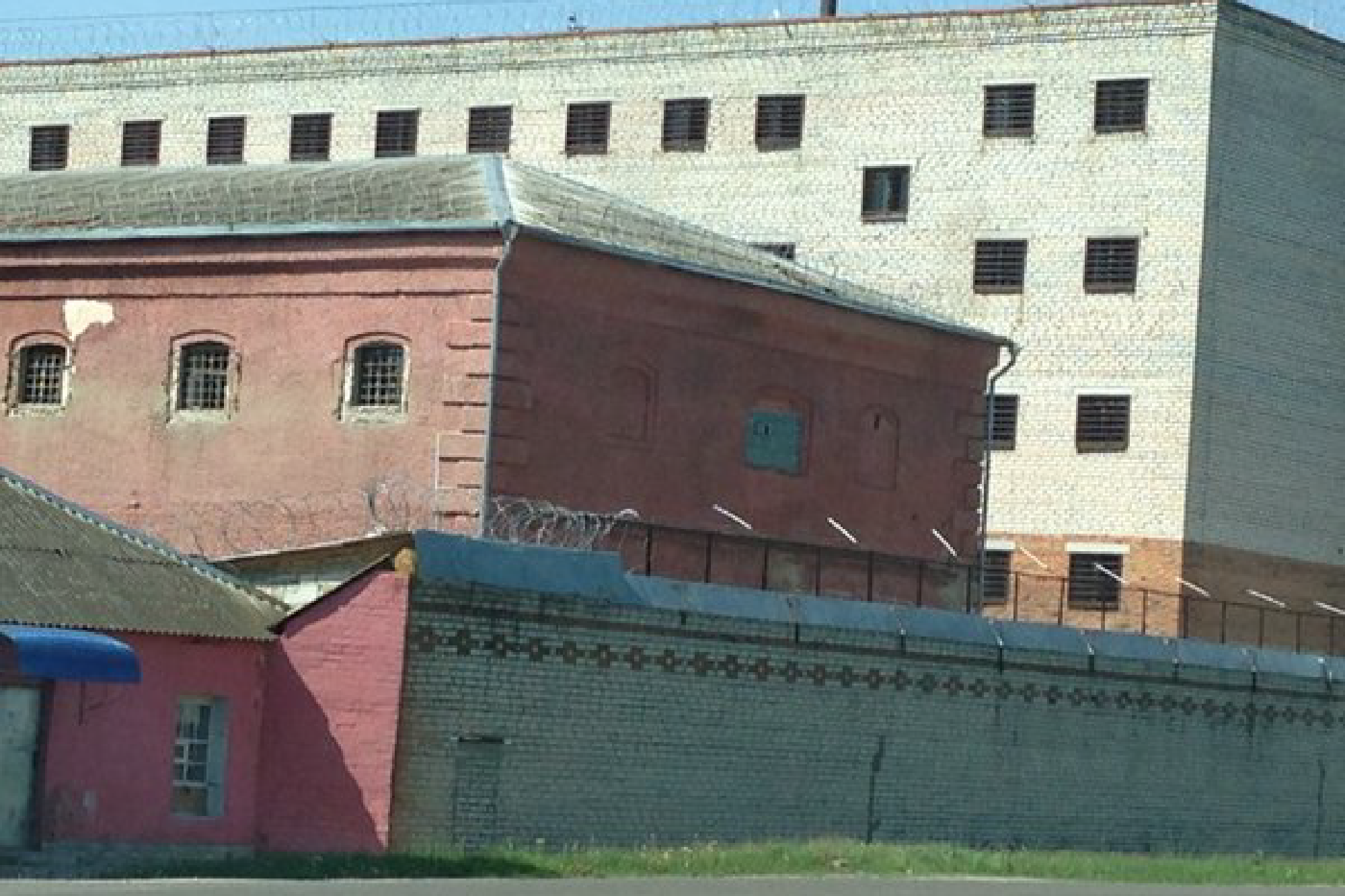
Russia's Secret Prison. About 650 Ukrainians are being held at Pretrial Detention Center No. 2 in the Bryansk Region
Source: MIPL
Author: Natalia Boguta
The prison is located in the city of Novozybkov, 170 km from Chernihiv. Ukrainian prisoners of war and civilian hostages are being held there. Most of them were taken to Bryansk Pretrial Detention Center No. 2 in February and March 2022 during Russia’s occupation of the Kyiv region.
Russia denies that any Ukrainian citizens are being held there. A Russian human rights lawyer, who attempted to enter the detention center at the request of the International Institute for Human Rights (IIHR), was told at the entrance that there were no Ukrainian citizens there and was denied a meeting with prison officials. However, the lawyer’s sources in Novozybkov report that hundreds of Ukrainians are being held in Pretrial Detention Center No. 2. The lawyer also sent an inquiry to the Bryansk Regional Office of the Federal Penitentiary Service regarding Dmytro Khylyuk—a Ukrainian journalist abducted by the Russians and currently being held in Pretrial Detention Center No. 2. They reported that they have no information regarding Khylyuk’s whereabouts. The Investigative Committee of the Russian Federation also responded to the lawyer, stating that it has no information regarding any open criminal proceedings against the journalist. At the same time, witnesses interviewed by the International Institute for Human Rights (MIPL) claim that Dmytro Khylyuk is being held precisely at Pretrial Detention Center No. 2 in Novozybkov—a secret prison for Ukrainian hostages and prisoners of war.
The route from Ukraine to Novozybkov—this is roughly how detainees were transported from the
Kyiv region
“The intake process at the detention center is brutal; they beat you so badly that it takes two weeks to recover”
No matter where Ukrainian citizens were detained in the occupied territories of the Kyiv region, they were first transported to Gostomel. There was a large collection point for 100 prisoners, which the Russians set up in industrial cold storage units near the airfield. Some spent just one night in these facilities; others stayed much longer. “I was held in Gostomel for two weeks in those cold storage units, where there were also up to ten military personnel and about 80 civilians. People of various ages were there, including older men with whom I was later held in a Russian prison—for example, Vasyl Vasylovych, born in 1953, who is still in Bryansk Pretrial Detention Center No. 2. From Gostomel, I was taken to Belarus at the end of March, where I stayed for three days, and on March 30, I was admitted to Bryansk Pretrial Detention Center No. 2,” Vladislav (name changed at the witness’s request), a serviceman released through prisoner exchanges, tells the MIPL.
Bryansk Pretrial Detention Center No. 2, Novozybkov
When detainees are transported to the Bryansk Pretrial Detention Center, their escorts often tell them exactly where the vehicle is headed. There are also cases where a member of the escort explained in detail what would happen upon arrival at the prison. “More than 30 of us were loaded into the vehicle; we were escorted by military police, and a guard was with us. He told us what would happen next. For example, he said that if you get out of the vehicle and fall, the special forces won’t pick you up—they’ll drag you across the asphalt, leaving your knees covered in blood. He let us lift our hoods slightly so we could see where we were stepping as we got out of the vehicle. There was a guy with us who had previously served time in a penal colony; he said that they treated us at the Bryansk pretrial detention center just like they treat death row inmates in Ukraine,” says Dmytro Levytskyi, a volunteer who was released through a prisoner exchange last May. The MIPL has already reported on the story of his abduction and detention in prison.
Alexander (name changed at the witness’s request), a witness released through a prisoner exchange in May 2022, says that the captives were dragged out of the vehicle and kicked all the way to the prison entrance: “We were falling. As soon as you get up, they kick you again. You have to keep your head down; they’re yelling at you, the dogs are barking… Whichever dog catches you—it’ll tear a chunk out of you.”
Former prisoner of war Vladislav says that the intake process at Pretrial Detention Center No. 2 was designed to intimidate new arrivals as much as possible. “They broke all my ribs during intake; one is still sticking out. They beat all of us very badly; our legs were black and blue, they hit us hard in the ribs, but they didn’t hit us on the head—though later, inside the detention center itself, they did hit us on the head as well. It took a month for everything to heal; I couldn’t lie down or get out of bed,” the man recalls.
The prisoners were processed very quickly. After the beating, they were sent to hand over their clothes, take a cold 30-second shower, and were issued prison uniforms and rubber slippers. Next came the medical examination.
“On March 23, they took us out of Dymer; on the 24th, they transported us from Gostomel to Belarus; and on the 25th, they brought us to the detention center in Novozybkov. A haircut, a medical exam, blood draw, chest X-ray, and fingerprinting—all of this took place within an hour on the very first day. Everything was done quickly. Between the medical exam and the fingerprinting, we were given a mattress, a towel, a bar of soap, a toothbrush, and a small tube of toothpaste. They also filmed us—they ordered us to say that we pledged not to speak out against the special military operation and so on. By the way, the detention center staff told us right there that “in two or three weeks, everything will be fine,” says former hostage Dmytro Levytskyi.
Dmytro Khilyuk, a Ukrainian journalist being held by the Russians at Bryansk Pretrial Detention Center No. 2
The staff at Pretrial Detention Center No. 2 were quick to mention the time frame, as the hostages from the Kyiv region have been there for 11 months already. In addition to journalist Dmytro Khilyuk, this secret prison holds former ATO veteran Yaroslav Grokh from Tolokunya in the Kyiv region, about whom the MIPL has previously reported.
“Every day—cell searches; almost constantly—kicks and blows to the ribs”
After registration, the detainees are distributed among the cells. Pretrial Detention Center No. 2 in Novozybkov has two buildings. One is three stories high, the other five stories high. Prisoners are constantly being transferred from one cell to another, from one floor to another, and from one building to another. In this way, a single person can be moved between 4 and 6 cells over the course of ten months of captivity.
The cells are small, and they are all designed to hold different numbers of people. There are cells for 2, 3, or 4 people, and there are also those that hold 26 people. “The cell had beds, a toilet, a sink, a table, and two benches,” says Dmytro Levytskyi.
A four-person cell at Pretrial Detention Center No. 2
“Every morning, they would herd us out for an inspection; a detention center employee would come in and tap the walls with a hammer. They inspected the cells twice a day. Reveille was always at 6 a.m. We were constantly forced to stand in the cell. We could stand all day with our heads bowed; it depended on the floor—how long we had to stand like that,” says Vladislav, a former prisoner of war. Almost every day, prisoners were ordered to stand still and not move around the cell. If anyone ignored the order and started walking around the cell, special forces officers would immediately rush in and beat them. Breaks when sitting down was allowed lasted only a few minutes during breakfast, lunch, and dinner.
All witnesses interviewed by the International Institute for Human Rights (IIHR) claim that special forces officers regularly beat prisoners at Bryansk Pretrial Detention Center No. 2. “When I was in a cell on the third floor, the special forces constantly kicked us with their combat boots. They ordered us to bend over very low. The taller guys, who physically couldn’t bend that low, got it the worst. We knew they’d beat us during inspections, but we eventually got used to it—it didn’t surprise or scare us anymore,” says Vladislav, a former prisoner of war. He adds that they inspected the mattresses once a week. At that time, the prisoners had to run down the hallway with their belongings to a special room, where they had to undress, unfold their mattresses, and shout, “Glory to Russia!” “During this time, the person conducting the inspection could hit someone with a pillow. And whoever was last in line for the inspection could be zapped with a stun gun,” recalls Vladislav.
Sometimes mass beatings of prisoners took place against the backdrop of news from the front. That’s how the prisoners found out that the Ukrainian Armed Forces had successfully struck Russian positions. “They’d rush in then and start beating us—as a kind of revenge for their own. One time they rushed in, started beating us, and shouted: ‘Ukrainians, monsters, we’re making a gesture of goodwill—we’re pulling back from Kyiv, but your Bandera fascists are shooting at our backs from balconies, bushes, and manhole covers,” says former hostage Oleksandr.
Yaroslav Grokh, abducted by the Russian Armed Forces, is being held at Bryansk Pretrial Detention Center No. 2 in Novozybkov
Some prisoners were beaten more often than others. This was because the special forces had information suggesting that these civilians were coordinators for the Ukrainian Armed Forces. The Russians mocked men with patriotic tattoos or former ATO veterans the most.
Medical care in the Russian prison was limited. A doctor might give a pill, but wouldn’t say which one. If a person had a serious chronic condition, such as diabetes, the doctor would come three times a day to administer an insulin injection. As for injuries resulting from beatings, no one treated them. “Some people had inflamed wounds after being beaten. They were given some kind of pill that seemed to temporarily ease the pain, but that wasn’t treatment,” says Vladislav, a former detainee at Bryansk Pretrial Detention Center No. 2. According to Dmytro Levytskyi, those with festering wounds were taken to the medical station to have their dressings changed.
Detention
Center Corridor
“There was always a doctor present during our morning roll call. The special forces would beat us, and then they’d call the doctor. If someone was feeling sick, he’d give them a pill. There was one incident where a guy was taken out and then disappeared. It all started when his leg swelled up from the beatings, and he gradually began to lose his mind—perhaps due to the inflammation or something. They kept giving him some kind of pills, and then they took him out of the cell, but no one knows where they took him. We don’t know if he’s still alive. He may have died—he wasn’t given any medical care,” Vladislav testifies.
“Constant interrogations with the same questions over and over. We were always hungry.”
The daily routine at Bryansk Pretrial Detention Center No. 2 included a bathhouse visit—once a week, prisoners were taken out in turns and escorted to the showers under supervision. From time to time, prisoners were also taken out for fresh air. However, such walks lasted no longer than 5–7 minutes. As for food, at the prison in Novozybkov, they were fed three times a day, but the portions were very small. Some witnesses say that lunch (consisting of soup, stew, and a piece of bread) fit into half an aluminum mug. “For breakfast, there was milk porridge—semolina, oatmeal, and various others. For lunch—soup (like shchi) or a pinkish broth—they said it was borscht. The second course for lunch was potato stew. Dinner might have been pasta. Once a week—fried or steamed herring,” says former detainee Vladislav. The food rations for prisoners at Bryansk Pretrial Detention Center No. 2 have increased only in the last few months: whereas they used to be given half a ladle of porridge or soup, since the end of August they’ve been getting a full ladle.
“We went to sleep hungry and woke up hungry. I returned from captivity 18 kg lighter. That was in just two months,” says former hostage Oleksandr in an interview with the MIPL.
Food in Pretrial Detention Centers
Hunger is a constant feeling for those held in Russian prisons. This applies not only to Bryansk Pretrial Detention Center No. 2. At Pretrial Detention Center No. 2 in Taganrog, detainees are also fed very poorly, leaving them completely drained of strength. Former detainee Vladislav says that because of the food shortage, prisoners often talk about food and recall how they used to eat or cook while free—back home in Ukraine.
A major part of the prisoners’ unbearable experience at Bryansk Pretrial Detention Center No. 2 is the interrogations. Prisoners are constantly taken to special interrogation rooms, where they are interrogated either by representatives of the Russian security services—who wear balaclavas and do not disclose their positions—or by representatives of the military prosecutor’s office, who sometimes identify themselves and even provide the prisoner with the interrogation transcript to sign. The same person may be interrogated by different individuals three or four times a day. Those of particular interest to the Russians are interrogated regularly. Others are interrogated only during the first two weeks of their stay in the secret prison and are left alone afterward.
“They asked where the ammunition depots and fuel depots were, and who I knew from ‘Azov’ among the ATO fighters. They consider ‘Azov’ a terrorist organization and are very concerned about this issue. They also asked about my parents and relatives, gathering all the information they could. On the first day, I went through a lot of interrogations. And six months later, during one of the interrogations, I saw some student who questioned me half-heartedly for seven minutes, then had me sign the transcript,” notes former prisoner of war Vladislav.
Dmytro Levytskyi was held at Bryansk Pretrial Detention Center No. 2
Dmytro Levytskyi notes that during interrogations, the questions are repeated over and over. In his opinion, this is how they try to catch you in a lie. “The first three interrogations were all the same: who do you know among the military, Azov fighters, volunteer battalions, and Nazis. The same questions every single time,” says Levytskyi. “Sometimes they asked the guys if they were nationalists. Then they replied that they didn’t know what that meant, but if it meant that they were defending the country from invasion and aggression, then, sure, they were nationalists.”
Witnesses interviewed by the MIPL say that prisoners were not tortured during interrogations; they were even sometimes offered tea. Special attention is paid to propaganda at Bryansk Pretrial Detention Center No. 2. To this end, prisoners are forced every morning to sing the Russian national anthem and shout, “Glory to Russia!” They are also constantly called fascists and Nazis and are forced to stop speaking Ukrainian. “He (the guard) opens the small window in the cell and says, ‘Speak Russian, speak Russian,’” says Dmytro Levytskyi. According to him, a TV set is passed from cell to cell, on which Russian programs are shown, and afterward the guards ask the prisoners what they saw and heard while watching—they must recount the news.
Lately, the TV has been brought in less and less often. A man who was released in January 2023 as part of a prisoner exchange tells the MIPL that prisoners are now required to watch TV only once or twice a month. Former prisoner Oleksandr notes that there were no live broadcasts—a flash drive containing recordings of propaganda programs is inserted into the TV, and these are what the prisoners are shown.
Prison staff try to convince the prisoners that Ukraine no longer exists and that the Ukrainian Armed Forces have been defeated in the war with Russia. They are also asked to sign a statement declaring that they refuse to participate in prisoner exchanges. “Many refused to be exchanged and were transferred to other prisons. There were people who had come to the Kyiv region from Crimea and Kherson. The Russians explained to them that exchanging them would be like swapping Russia for Russia. They lied to us, saying that Kyiv had been bombed and no longer existed—‘Where are you going to go?’ they’d say. ‘Take Russian citizenship, and we’ll find you a job.’ And some believed them and gave in. “I knew it was a lie,” says Oleksandr, a former prisoner.
The main dream of every prisoner in Bryansk Pretrial Detention Center No. 2 is to be released through an exchange and return to Ukraine. Since they are constantly being moved between cells, floors, and buildings, the prisoners don’t know when or who has been released in an exchange.
Author: Natalia Boguta
The prison is located in the city of Novozybkov, 170 km from Chernihiv. Ukrainian prisoners of war and civilian hostages are being held there. Most of them were taken to Bryansk Pretrial Detention Center No. 2 in February and March 2022 during Russia’s occupation of the Kyiv region.
Russia denies that any Ukrainian citizens are being held there. A Russian human rights lawyer, who attempted to enter the detention center at the request of the International Institute for Human Rights (IIHR), was told at the entrance that there were no Ukrainian citizens there and was denied a meeting with prison officials. However, the lawyer’s sources in Novozybkov report that hundreds of Ukrainians are being held in Pretrial Detention Center No. 2. The lawyer also sent an inquiry to the Bryansk Regional Office of the Federal Penitentiary Service regarding Dmytro Khylyuk—a Ukrainian journalist abducted by the Russians and currently being held in Pretrial Detention Center No. 2. They reported that they have no information regarding Khylyuk’s whereabouts. The Investigative Committee of the Russian Federation also responded to the lawyer, stating that it has no information regarding any open criminal proceedings against the journalist. At the same time, witnesses interviewed by the International Institute for Human Rights (MIPL) claim that Dmytro Khylyuk is being held precisely at Pretrial Detention Center No. 2 in Novozybkov—a secret prison for Ukrainian hostages and prisoners of war.
The route from Ukraine to Novozybkov—this is roughly how detainees were transported from the
Kyiv region
“The intake process at the detention center is brutal; they beat you so badly that it takes two weeks to recover”
No matter where Ukrainian citizens were detained in the occupied territories of the Kyiv region, they were first transported to Gostomel. There was a large collection point for 100 prisoners, which the Russians set up in industrial cold storage units near the airfield. Some spent just one night in these facilities; others stayed much longer. “I was held in Gostomel for two weeks in those cold storage units, where there were also up to ten military personnel and about 80 civilians. People of various ages were there, including older men with whom I was later held in a Russian prison—for example, Vasyl Vasylovych, born in 1953, who is still in Bryansk Pretrial Detention Center No. 2. From Gostomel, I was taken to Belarus at the end of March, where I stayed for three days, and on March 30, I was admitted to Bryansk Pretrial Detention Center No. 2,” Vladislav (name changed at the witness’s request), a serviceman released through prisoner exchanges, tells the MIPL.
Bryansk Pretrial Detention Center No. 2, Novozybkov
When detainees are transported to the Bryansk Pretrial Detention Center, their escorts often tell them exactly where the vehicle is headed. There are also cases where a member of the escort explained in detail what would happen upon arrival at the prison. “More than 30 of us were loaded into the vehicle; we were escorted by military police, and a guard was with us. He told us what would happen next. For example, he said that if you get out of the vehicle and fall, the special forces won’t pick you up—they’ll drag you across the asphalt, leaving your knees covered in blood. He let us lift our hoods slightly so we could see where we were stepping as we got out of the vehicle. There was a guy with us who had previously served time in a penal colony; he said that they treated us at the Bryansk pretrial detention center just like they treat death row inmates in Ukraine,” says Dmytro Levytskyi, a volunteer who was released through a prisoner exchange last May. The MIPL has already reported on the story of his abduction and detention in prison.
Alexander (name changed at the witness’s request), a witness released through a prisoner exchange in May 2022, says that the captives were dragged out of the vehicle and kicked all the way to the prison entrance: “We were falling. As soon as you get up, they kick you again. You have to keep your head down; they’re yelling at you, the dogs are barking… Whichever dog catches you—it’ll tear a chunk out of you.”
Former prisoner of war Vladislav says that the intake process at Pretrial Detention Center No. 2 was designed to intimidate new arrivals as much as possible. “They broke all my ribs during intake; one is still sticking out. They beat all of us very badly; our legs were black and blue, they hit us hard in the ribs, but they didn’t hit us on the head—though later, inside the detention center itself, they did hit us on the head as well. It took a month for everything to heal; I couldn’t lie down or get out of bed,” the man recalls.
The prisoners were processed very quickly. After the beating, they were sent to hand over their clothes, take a cold 30-second shower, and were issued prison uniforms and rubber slippers. Next came the medical examination.
“On March 23, they took us out of Dymer; on the 24th, they transported us from Gostomel to Belarus; and on the 25th, they brought us to the detention center in Novozybkov. A haircut, a medical exam, blood draw, chest X-ray, and fingerprinting—all of this took place within an hour on the very first day. Everything was done quickly. Between the medical exam and the fingerprinting, we were given a mattress, a towel, a bar of soap, a toothbrush, and a small tube of toothpaste. They also filmed us—they ordered us to say that we pledged not to speak out against the special military operation and so on. By the way, the detention center staff told us right there that “in two or three weeks, everything will be fine,” says former hostage Dmytro Levytskyi.
Dmytro Khilyuk, a Ukrainian journalist being held by the Russians at Bryansk Pretrial Detention Center No. 2
The staff at Pretrial Detention Center No. 2 were quick to mention the time frame, as the hostages from the Kyiv region have been there for 11 months already. In addition to journalist Dmytro Khilyuk, this secret prison holds former ATO veteran Yaroslav Grokh from Tolokunya in the Kyiv region, about whom the MIPL has previously reported.
“Every day—cell searches; almost constantly—kicks and blows to the ribs”
After registration, the detainees are distributed among the cells. Pretrial Detention Center No. 2 in Novozybkov has two buildings. One is three stories high, the other five stories high. Prisoners are constantly being transferred from one cell to another, from one floor to another, and from one building to another. In this way, a single person can be moved between 4 and 6 cells over the course of ten months of captivity.
The cells are small, and they are all designed to hold different numbers of people. There are cells for 2, 3, or 4 people, and there are also those that hold 26 people. “The cell had beds, a toilet, a sink, a table, and two benches,” says Dmytro Levytskyi.
A four-person cell at Pretrial Detention Center No. 2
“Every morning, they would herd us out for an inspection; a detention center employee would come in and tap the walls with a hammer. They inspected the cells twice a day. Reveille was always at 6 a.m. We were constantly forced to stand in the cell. We could stand all day with our heads bowed; it depended on the floor—how long we had to stand like that,” says Vladislav, a former prisoner of war. Almost every day, prisoners were ordered to stand still and not move around the cell. If anyone ignored the order and started walking around the cell, special forces officers would immediately rush in and beat them. Breaks when sitting down was allowed lasted only a few minutes during breakfast, lunch, and dinner.
All witnesses interviewed by the International Institute for Human Rights (IIHR) claim that special forces officers regularly beat prisoners at Bryansk Pretrial Detention Center No. 2. “When I was in a cell on the third floor, the special forces constantly kicked us with their combat boots. They ordered us to bend over very low. The taller guys, who physically couldn’t bend that low, got it the worst. We knew they’d beat us during inspections, but we eventually got used to it—it didn’t surprise or scare us anymore,” says Vladislav, a former prisoner of war. He adds that they inspected the mattresses once a week. At that time, the prisoners had to run down the hallway with their belongings to a special room, where they had to undress, unfold their mattresses, and shout, “Glory to Russia!” “During this time, the person conducting the inspection could hit someone with a pillow. And whoever was last in line for the inspection could be zapped with a stun gun,” recalls Vladislav.
Sometimes mass beatings of prisoners took place against the backdrop of news from the front. That’s how the prisoners found out that the Ukrainian Armed Forces had successfully struck Russian positions. “They’d rush in then and start beating us—as a kind of revenge for their own. One time they rushed in, started beating us, and shouted: ‘Ukrainians, monsters, we’re making a gesture of goodwill—we’re pulling back from Kyiv, but your Bandera fascists are shooting at our backs from balconies, bushes, and manhole covers,” says former hostage Oleksandr.
Yaroslav Grokh, abducted by the Russian Armed Forces, is being held at Bryansk Pretrial Detention Center No. 2 in Novozybkov
Some prisoners were beaten more often than others. This was because the special forces had information suggesting that these civilians were coordinators for the Ukrainian Armed Forces. The Russians mocked men with patriotic tattoos or former ATO veterans the most.
Medical care in the Russian prison was limited. A doctor might give a pill, but wouldn’t say which one. If a person had a serious chronic condition, such as diabetes, the doctor would come three times a day to administer an insulin injection. As for injuries resulting from beatings, no one treated them. “Some people had inflamed wounds after being beaten. They were given some kind of pill that seemed to temporarily ease the pain, but that wasn’t treatment,” says Vladislav, a former detainee at Bryansk Pretrial Detention Center No. 2. According to Dmytro Levytskyi, those with festering wounds were taken to the medical station to have their dressings changed.
Detention
Center Corridor
“There was always a doctor present during our morning roll call. The special forces would beat us, and then they’d call the doctor. If someone was feeling sick, he’d give them a pill. There was one incident where a guy was taken out and then disappeared. It all started when his leg swelled up from the beatings, and he gradually began to lose his mind—perhaps due to the inflammation or something. They kept giving him some kind of pills, and then they took him out of the cell, but no one knows where they took him. We don’t know if he’s still alive. He may have died—he wasn’t given any medical care,” Vladislav testifies.
“Constant interrogations with the same questions over and over. We were always hungry.”
The daily routine at Bryansk Pretrial Detention Center No. 2 included a bathhouse visit—once a week, prisoners were taken out in turns and escorted to the showers under supervision. From time to time, prisoners were also taken out for fresh air. However, such walks lasted no longer than 5–7 minutes. As for food, at the prison in Novozybkov, they were fed three times a day, but the portions were very small. Some witnesses say that lunch (consisting of soup, stew, and a piece of bread) fit into half an aluminum mug. “For breakfast, there was milk porridge—semolina, oatmeal, and various others. For lunch—soup (like shchi) or a pinkish broth—they said it was borscht. The second course for lunch was potato stew. Dinner might have been pasta. Once a week—fried or steamed herring,” says former detainee Vladislav. The food rations for prisoners at Bryansk Pretrial Detention Center No. 2 have increased only in the last few months: whereas they used to be given half a ladle of porridge or soup, since the end of August they’ve been getting a full ladle.
“We went to sleep hungry and woke up hungry. I returned from captivity 18 kg lighter. That was in just two months,” says former hostage Oleksandr in an interview with the MIPL.
Food in Pretrial Detention Centers
Hunger is a constant feeling for those held in Russian prisons. This applies not only to Bryansk Pretrial Detention Center No. 2. At Pretrial Detention Center No. 2 in Taganrog, detainees are also fed very poorly, leaving them completely drained of strength. Former detainee Vladislav says that because of the food shortage, prisoners often talk about food and recall how they used to eat or cook while free—back home in Ukraine.
A major part of the prisoners’ unbearable experience at Bryansk Pretrial Detention Center No. 2 is the interrogations. Prisoners are constantly taken to special interrogation rooms, where they are interrogated either by representatives of the Russian security services—who wear balaclavas and do not disclose their positions—or by representatives of the military prosecutor’s office, who sometimes identify themselves and even provide the prisoner with the interrogation transcript to sign. The same person may be interrogated by different individuals three or four times a day. Those of particular interest to the Russians are interrogated regularly. Others are interrogated only during the first two weeks of their stay in the secret prison and are left alone afterward.
“They asked where the ammunition depots and fuel depots were, and who I knew from ‘Azov’ among the ATO fighters. They consider ‘Azov’ a terrorist organization and are very concerned about this issue. They also asked about my parents and relatives, gathering all the information they could. On the first day, I went through a lot of interrogations. And six months later, during one of the interrogations, I saw some student who questioned me half-heartedly for seven minutes, then had me sign the transcript,” notes former prisoner of war Vladislav.
Dmytro Levytskyi was held at Bryansk Pretrial Detention Center No. 2
Dmytro Levytskyi notes that during interrogations, the questions are repeated over and over. In his opinion, this is how they try to catch you in a lie. “The first three interrogations were all the same: who do you know among the military, Azov fighters, volunteer battalions, and Nazis. The same questions every single time,” says Levytskyi. “Sometimes they asked the guys if they were nationalists. Then they replied that they didn’t know what that meant, but if it meant that they were defending the country from invasion and aggression, then, sure, they were nationalists.”
Witnesses interviewed by the MIPL say that prisoners were not tortured during interrogations; they were even sometimes offered tea. Special attention is paid to propaganda at Bryansk Pretrial Detention Center No. 2. To this end, prisoners are forced every morning to sing the Russian national anthem and shout, “Glory to Russia!” They are also constantly called fascists and Nazis and are forced to stop speaking Ukrainian. “He (the guard) opens the small window in the cell and says, ‘Speak Russian, speak Russian,’” says Dmytro Levytskyi. According to him, a TV set is passed from cell to cell, on which Russian programs are shown, and afterward the guards ask the prisoners what they saw and heard while watching—they must recount the news.
Lately, the TV has been brought in less and less often. A man who was released in January 2023 as part of a prisoner exchange tells the MIPL that prisoners are now required to watch TV only once or twice a month. Former prisoner Oleksandr notes that there were no live broadcasts—a flash drive containing recordings of propaganda programs is inserted into the TV, and these are what the prisoners are shown.
Prison staff try to convince the prisoners that Ukraine no longer exists and that the Ukrainian Armed Forces have been defeated in the war with Russia. They are also asked to sign a statement declaring that they refuse to participate in prisoner exchanges. “Many refused to be exchanged and were transferred to other prisons. There were people who had come to the Kyiv region from Crimea and Kherson. The Russians explained to them that exchanging them would be like swapping Russia for Russia. They lied to us, saying that Kyiv had been bombed and no longer existed—‘Where are you going to go?’ they’d say. ‘Take Russian citizenship, and we’ll find you a job.’ And some believed them and gave in. “I knew it was a lie,” says Oleksandr, a former prisoner.
The main dream of every prisoner in Bryansk Pretrial Detention Center No. 2 is to be released through an exchange and return to Ukraine. Since they are constantly being moved between cells, floors, and buildings, the prisoners don’t know when or who has been released in an exchange.
This is an automatic translation generated by DeepL.